‘Find My Cat’: Using AirTags to Establish Home Ranges of Feral Cats on St. Kitts
DOI:
https://doi.org/10.56771/jsmcah.v5.163Keywords:
trap-neuter-return, population ecology, GPS collars, animal behavior, animal welfareAbstract
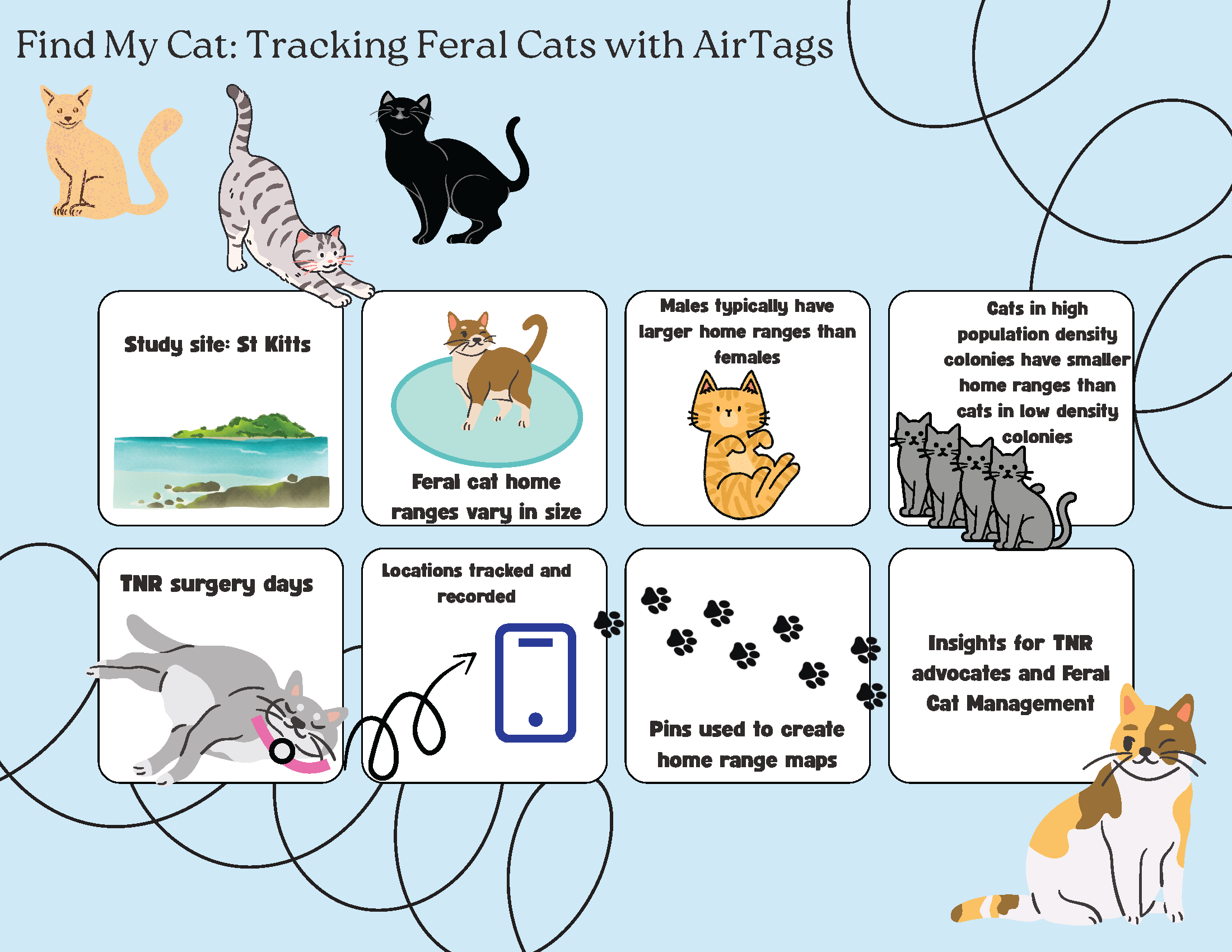
Feral cats occupy home ranges that vary in size based on many factors, primarily sex, cat population density, and landscape productivity. As part of a companion study assessing the abundance of feral cats on St. Kitts, we analyzed the feasibility of a lightweight, cost-effective method for tracking their movements. In this observational study, we aim to determine the effectiveness of using Apple AirTags to track movements of feral cats. Quick-release collars with AirTags attached were placed on cats trapped for trap-neuter-return (TNR) during surgery ‘spay’ days while they were still heavily sedated in recovery from anesthesia. The results yielded limited success due to inconsistent location updates, likely because of insufficient numbers of Apple devices within range for the AirTags to ‘ping’ off of, as well as the abilities of feral cats to disable the quick-release mechanism. However, despite the issues encountered, our estimates were consistent with existing data, suggesting that sex and reproductive status impact the home ranges of feral cats. Further efforts with this method should be conducted in a region with a higher density of Apple devices, as knowledge of feral cat home ranges could provide valuable insight for TNR advocates and planning of trapping events.
Downloads
References
1.
Boitani L, Fuller TK. Research Techniques in Animal Ecology: Controversies and Consequences. New York City: Columbia University Press; 2000.
2.
Bengsen AJ, Algar D, Ballard G, et al. Feral Cat Home-Range Size Varies Predictably with Landscape Productivity and Population Density. J Zool. 2016;298(2):112–120. doi: 10.1111/jzo.12290
3.
Nottingham CM, Buckley HL, Case BS, Glen AS, Stanley MC. Factors Affecting Home Range Size of Feral Cats: A Meta-Analysis. N Z J Ecol. 2022;46(2):1–10.
4.
Mohr CO. Table of Equivalent Populations of North American Small Mammals. Am Midl Naturalist. 1947;37(1):223. doi: 10.2307/2421652
5.
AirTag – Apple. Accessed October 31, 2025. https://www.apple.com/airtag/
6.
Vendramini THA, Amaral AR, Pedrinelli V, Zafalon RVA, Rodrigues RBA, Brunetto MA. Neutering in Dogs and Cats: Current Scientific Evidence and Importance of Adequate Nutritional Management. Nutr Res Rev. 2020;33(1):134–144. doi: 10.1017/S0954422419000271
Additional Files
Published
Issue
Section
License
Copyright (c) 2026 Emily Hunt, Sarah Hooper, Andrea Peda, Ryan Cavanaugh

This work is licensed under a Creative Commons Attribution 4.0 International License.
How to Cite