ORIGINAL RESEARCH ARTICLE
Cats in Space: Quantifying the Community Cat Caregiver Network
Sue M. Neal1,2* and Peter J. Wolf3
1Veterinary Care Accessibility Project, Rochester, MI, USA; 2Department of Political Science, Arkansas State University, Jonesboro, AR, USA; 3Best Friends Animal Society, Kanab, UT, USA
Abstract
Introduction: For many US animal shelters, the majority of feline admissions are classified as ‘strays’. Historically, many of these cats were euthanatized despite being in generally good health. Return-to-field programs – shelter-based versions of the more traditional (i.e. community-based) trap-neuter-return (TNR) programs – offer an alternative, increasing a shelter’s live outcomes as eligible cats are sterilized, vaccinated, and returned to the location where they were found. It is not unusual for these programs to be conducted without any direct knowledge of caregivers associated with specific cats. Instead, they rely on the general health of the cats as a sign that they are receiving sufficient care. The objective of this study was to quantify the extent of the community cat ‘caregiver network’ by applying a geospatial analysis to a large set of cat and caregiver location data.
Methods: For this retrospective observational study, we used two sets of cat and caregiver location data (22,521 records in all). An empirical network was created using records for which both cat and caregiver location were known; a theoretical network was created using records for which no caregiver location was available (the cats having come through the local shelter system as ‘strays’). These two caregiver networks were then used to estimate the distances between community cats and potential caregivers nearby.
Results: Our results suggest that most cats in the study community are located within distances that are reasonably consistent with well-documented feline home ranges and foraging behavior in urban and suburban environments. For cats included in the area’s extensive TNR program, for example, the median distance to the second nearest caregiver was 235 m. For cats entering the shelter system as strays, the median distance to the nearest known caregiver was similar (246 m). Our theoretical network suggests that if 20% of households in the study are provided care for outdoor cats, 66.7% of cats would be within 126 meters of a theoretical caregiver, 20.7% would be within 80 meters.
Conclusion: The general availability of resources revealed by these findings might help explain the results of previous research (and considerable anecdotal evidence) documenting the good general health of community cats.
Keywords: community cats; free-roaming cats; geospatial; return-to-field; RTF; TNR; trap-neuter-return; welfare
Citation: Journal of Shelter Medicine and Community Animal Health 2026, 5: 168 - http://dx.doi.org/10.56771/jsmcah.v5.168
Copyright: © 2026 Sue M. Neal and Peter J. Wolf. This is an Open Access article distributed under the terms of the Creative Commons Attribution 4.0 International License (http://creativecommons.org/licenses/by/4.0/), allowing third parties to copy and redistribute the material in any medium or format and to remix, transform, and build upon the material for any purpose, even commercially, provided the original work is properly cited and states its license.
Received: 13 January 2026; Revised: 14 August 2026; Accepted: 15 August 2026; Published: 28 September 2026
Competing interests and funding: In recognition of JSMCAH policy and our ethical obligations as researchers, the authors acknowledge that 1 of us (PJW) is employed by a national animal welfare organization that promotes TNR and RTF programs.
Correspondence: *Sue M. Neal, Veterinary Care Accessibility Project, Rochester, MI, USA. Email: sneal@astate.edu
Reviewers: Brianna Lovell Myers, Andrea Peda
Having originated in the UK and Europe, trap-neuter-return (TNR) began to gain traction as a method for managing unowned free-roaming cat populations in the US during the 1980s.1 In recent years, these programs have become increasingly common, with a growing body of evidence demonstrating their ability to stabilize and reduce local populations,2–9 superiority over lethal removal,10,11 and strong public support.12
Caregivers have played an integral role in TNR programs from their earliest days, often providing food, water, shelter, and necessary veterinary care following the cats’ post-sterilization return.1 Their importance has received increased attention in recent years. The FelineVMA (formerly American Association of Feline Practitioners), for example, ‘supports the humane management of free-roaming cats’ in part because the organization recognizes the importance of ‘free-roaming cat caregivers and their human–animal bond’.13 This special bond, too, is receiving increased attention, with researchers documenting ‘levels of attachment… nearly identical to those previously reported by cat owners’ in the US14 and the ‘negative impacts on caregiver psychological health and quality of life’ following an unannounced culling (via shooting) of community cats in New South Wales, Australia.15
The first large US city to embrace TNR as a fundamental part of its approach to animal sheltering was Jacksonville, Florida, in 2008, where the program was called ‘Feral Freedom’.16 Return-to-field (RTF), as these programs are known more generally, has been described as ‘an idea so big, and so effective, that it would come to transform the world of shelters’.17 In 2010, San José [California] Animal Care and Services implemented an RTF program and documented a 29.1% decrease in the admissions of cats and kittens over the first 4 years.18
For many US shelters, the majority of feline admissions are classified as ‘strays’.19,20 Historically, many of these cats were euthanized despite being in good health.21 The implementation of RTF programs has proved effective for reducing the euthanasia of healthy cats,22–26 reducing nuisance behaviors associated with intact cats, and encouraging cooperation between caregivers and shelter staff.27 In addition, a recent study suggests that these programs can also be quite effective at reuniting lost pet cats with their owners.28 A survey of Florida shelters admitting 200 or more cats during 2019 found that 30% had RTF programs and 50% had TNR programs.29
It is not unusual for RTF programs to proceed with the sterilization, vaccination, and return of cats without any direct knowledge of caregivers associated with specific cats. Instead, they rely on the general health of the cats as a sign that they are receiving sufficient care. Multiple studies of large-scale RTF and TNR programs have revealed rates of euthanasia for serious health concerns of 0.5% or less,23,26,30 while others have documented body condition scores (BCS) consistent with good overall health.31,32 Nevertheless, concerns over the health and welfare of RTF cats persist, prompting some to sue the San Diego Humane Society (SDHS) over the organization’s RTF program,33,34 which, the plaintiffs argued, involved ‘dumping friendly, adoptable cats on the streets’.35 SDHS, which prevailed after revising its program slightly, referred to the program as an ‘evidence-based, expert-endorsed, lifesaving approach to community cats’, noting that the ruling allowed the organization ‘to continue providing critical medical care, spay/neuter and safe return for unowned cats while reserving shelter space for animals who truly need it’.36
The objective of this study was to quantify the extent of the community cat ‘caregiver network’ by applying a geospatial analysis to a large set of cat and caregiver location data.
Methods
For this retrospective observational study, we analyzed cat and caregiver location data using records obtained from a TNR provider, as described in detail next.
Study site
Jefferson County is located along the western edge of Kentucky, in the eastern south-central region of the United States (Fig. 1). With an estimated population of 773,399 and 986 km2 of land area,37 it is the most densely populated county within the state and is typical of moderately sized metropolitan communities throughout the country. Human population density is highest in the urban center of Louisville, with lower densities in the outlying suburban parts of the county. We selected Jefferson County for this study in part because of its widespread use of TNR as the official approach for managing free-roaming cats, as stipulated by ordinance. This ordinance, enacted in 2012, covers all of Jefferson County, which has a unified government that includes Louisville and its outlying suburbs.38
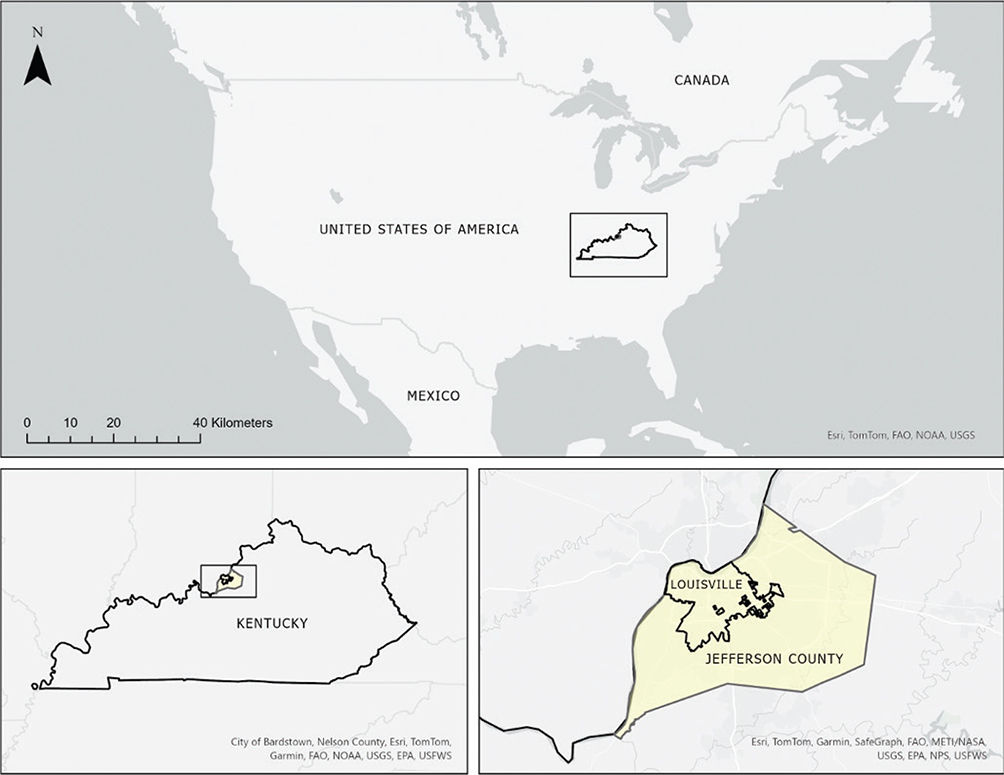
Fig. 1. Study area: Jefferson County, Kentucky, in the United States.
The non-profit organization Alley Cat Advocates (ACA) provides sterilization, vaccination, and ear-tipping for community cats brought by residents to their veterinary clinic, located in Louisville. With few exceptions (e.g. the demolition and redevelopment of the site where a cat was originally captured), these cats are returned to where they were trapped. Under agreement with the county, ACA provides the same services for cats entering local shelters as strays lacking identification; as with the cats brought to ACA by residents, the vast majority of these cats are returned to where they were trapped. Jefferson County has been the site of three previous studies of community cats, the first of which focused on increased lifesaving at Louisville Metro Animal Services following the implementation of intensive RTF and TNR efforts.39 The second study focused on caregivers’ attachment levels14 and the third on the public health benefits associated with TNR.40
Cat and caregiver data
We used data obtained from ACA for the period January 2020 through April 2023, which represents the period for which ACA had the highest level of confidence in the accuracy and completeness of their records. The data include the approximate age of each cat at the time of surgery, sex, trapping locations, and, where available, caregiver locations (i.e. exact street addresses). For the purposes of this study, the term ‘caregiver’ is used broadly, referring to any individual who provides any level of care for community cats, from food and water to TNR services to ongoing colony management. Cats trapped at the same address were aggregated into colonies for efficiency in geocoding and mapping; however, mesh analyses (described next) were based on the locations of individual cats.
To quantify the extent of the caregiver network, we used two sets of cat and caregiver location data. The first set of cat location data corresponds to cats brought by their caregivers (or a trapper representing the caregiver) to ACA for TNR (hereafter ‘ACA cats’); caregiver data were obtained from ACA’s caregiver records for each of these cats. The second set of cat location data corresponds to cats entering the TNR program through municipal shelters and for whom ACA provides sterilization, vaccination, and additional medical care as necessary (hereafter ‘shelter strays’). Since our dataset did not include caregiver location for these cats, we used data obtained from past surveys of feeders to estimate the density of Jefferson County’s theoretical caregiver network (explained in greater detail next).
Data cleaning
The data were cleaned to include only cats and caretakers who were located within the geographic boundaries of Jefferson County, as these data were considered more complete than data from the outlying counties included in the initial dataset obtained from ACA. Cat and caregiver location data were included only if addresses were suitable for geocoding. Five records were removed due to having addresses that did not return accurate geocoding. Cat and caregiver locations were geocoded to point-level locations of the street address. Addresses that included apartment numbers or differentiated only by lot number in a mobile home community were geocoded to the point-location of the main street address. The data were aggregated on the street address and the total number of cats at any street address location was used as a new variable for colony size. The data were also deduplicated with regard to the caregiver address to obtain a list of unique caregiver addresses.
All data cleaning and analysis were completed using R version 4.5.2; all mapping and geospatial analysis were done using ESRI’s ArcGIS Online (AGOL) platform. The research was determined to be exempt from IRB review by Arkansas State University.
Data analysis
Each caregiver network was based on the distances between cats and the residents known (empirical network) or assumed (theoretical network) to be providing, at a minimum, food. All geospatial analyses were completed in AGOL using the Find Nearest function. The Ohio River was set as a barrier so that no measurements crossed the river, and there was no limit set for cats’ maximum travel distance. AGOL’s Find Nearest function returns the nearest locations and distance between the two feature layer locations, measured as a Euclidean straight-line distance. For distances where there was a tie (i.e. distance one and two were the same, generally the case only in multihousing units), the same distance was used for both the nearest and second nearest caregiver variables). Once complete, the new feature layer was extracted from AGOL for additional analysis.
Descriptive statistics were calculated for colony size and the distances to the nearest and second nearest caregivers. These distances were calculated two ways: (1) considering each cat’s location as an independent point, and (2) considering each colony location as an independent point (regardless of how many cats were known to be at this location). Colony size was calculated by counting the number of cats from each address. (This variable represents only the cats known to be from a particular location during the study period and does not necessarily represent all cats at a particular location.) Colony sizes are reported for each group and in aggregate; distances to the nearest and second nearest caregivers are also reported.
For ACA cats, the network mesh densities are based on two known distances: (1) between each cat’s location and their caregiver, and (2) between each cat’s location and the second nearest known caregiver. The nearest caregiver was the cat’s caregiver of record; the second nearest caregiver was the caregiver nearest the cat’s location not identified as the caregiver of record.
For shelter strays, the network mesh is assumed to be similar; however, the distances between cats and caregivers are unknown since caregiver location data was unavailable. Cat location data included both ACA cats and shelter strays. Cat locations were aggregated and deduplicated, as some locations included both ACA cats and shelter strays. We used data obtained from past feeder surveys to identify 3 potential proportions of residents that would be expected to care for community cats: 5, 20 and 30% of households.41 A 1999 survey of Alachua County, Florida, residents found that 12% of households – including 14% of pet-owning households, and 17% of cat owners – fed unowned free-roaming cats.42 A 2005 survey of Santa Clara County, California, found a lower rate among residents of that community: 7%.43 However, national surveys by the American Pet Products Association have reported rates more in line with those from Alachua County: 14–17% of pet owners cared for free-roaming cats.44,45 More recently, a 2021 survey of seven US communities found that ‘an average of 30% of people feed community cats’.41 These values formed the underpinnings of a mesh of theoretical caregiver locations distributed throughout the county, with 5% being a conservative lower bound, 30% an upper bound, and 20% an intermediate estimate.
Theoretical caregiver network
US Census data from 2020 was used to determine the physical size of each census tract in Jefferson County, as well as the total number of households in each tract where cats were known to be located (again, based on ACA records). An equation was derived to calculate the expected maximum distance between any point (i.e. cat location) and the nearest theoretical caregiver. This equation was used to estimate the area associated with each household lot and the number of lots that would have to be traversed to locate a theoretical caregiver. These values were then compared to two home range values from the literature: 2 ha46 and 5 ha.47
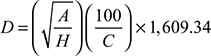
where D = the maximum distance from a cat to a theoretical caregiver in a given census tract (in meters):
- A = the area of the census tract (in square miles);
- H = the number of households within a given census tract; and
- C = the percentage of households considered theoretical caregivers.
The equation was derived as follows:
- Household lot area: Divide the total census tract area (A, obtained using data available in AGOL from the US Census Bureau) by the number of households (H, also obtained via AGOL) to calculate the average land area per household: A/H (square miles per household).
- Inter-household linear spacing: Take the square root of the household lot area to convert two-dimensional surface area into one-dimensional linear distance between adjacent household centers:
 (miles between neighboring homes).
 - Caregiver traversal distance: Divide 100 by the theoretical caregiver percentage (C) to determine how many household lots must be traversed to reach a theoretical caregiver (e.g. C = 20% means 100/20 = 5 lots).
- Unit conversion to meters: Multiply the cumulative linear distance in miles by the standard conversion factor 1,609.34 to yield the maximum distance in meters.
This part of our analysis relies on some key assumptions (Fig. 2). Firstly, all households and theoretical caregivers are assumed to be evenly distributed across space; secondly, the mesh is ‘mobile’ such that the caregiver will always be at the farthest possible point from the cat’s location. In order to test the impacts of this assumption, we estimated the proportion of households occupied by residents known to have brought cats to ACA for TNR during the study period. Using the equation above, a mesh corresponding to this proportion was created. The distances to each cat’s nearest theoretical caregiver were calculated two ways: (1) considering each cat’s location as an independent point and (2) considering each colony location as an independent point (regardless of how many cats were known to be at this location). This was done to determine the extent to which our results might be affected by colony-size skew being concentrated in particular census tracts. These distances were then compared to those associated with the nearest known caregivers (as described above), for both ACA and shelter cats.
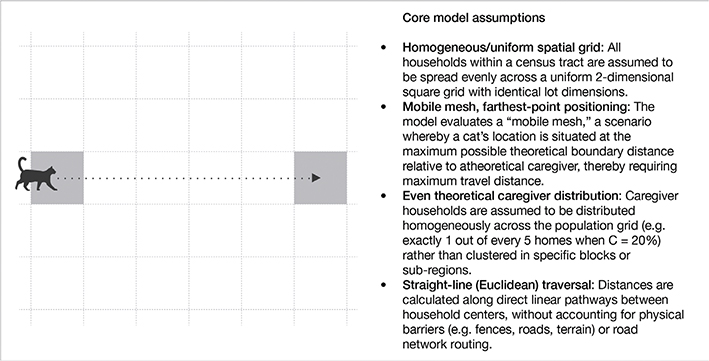
Fig. 2. Schematic illustrating the assumptions underlying a cat’s travel distance in our theoretical caregiver network (e.g. 20% of households being theoretical caregivers).
It is important to note that this analysis rests on the interpretation of data derived from Minimum Convex Polygon areas, conceptualized as circles (for simplicity) to derive a corresponding radius. Given the irregular shape of most home range visualizations found in the literature,5,48,49 it is likely that this would tend to underestimate cats’ home range size given the unidirectional bias in the home range polygons, thereby leading to conservative distance estimates.
Results
After cleaning, a total of 22,521 cat records were entered into the analysis. The results of the empirical caregiver analysis showed that, for ACA cats, the median distance to a cat’s nearest caregiver other than their caregiver of record was 235 meters. For shelter strays, the median distance to the nearest known caregiver was 246 meters; the median distance to the second nearest known caregiver was 409 meters (Table 1 and Fig. 3).
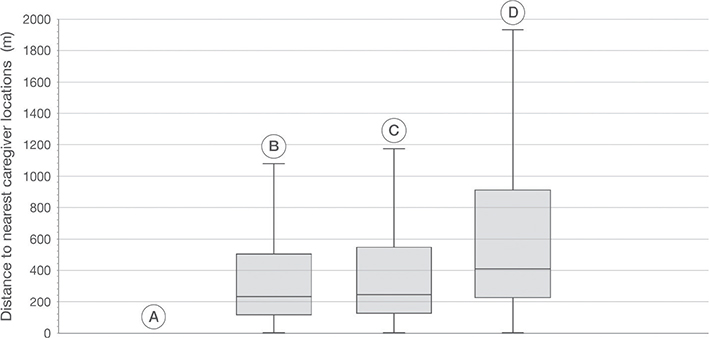
Fig. 3. Distances to nearest (A) and second nearest (B) caregiver locations for ACA cats, as well as nearest (C) and second nearest (D) caregiver locations for shelter strays. Note that no data is shown for (A) because of the very low values (Table 1). Upper and lower bounds of boxes represent 75th and 25th percentiles, respectively, with the horizontal line representing medians. Whiskers represent the maximum and minimum data points within the limits set by 1.5 × IQR above the 75th percentile minimum and below the 25th. ACA: Alley Cat Advocates; IQR: interquartile range.
The results of the theoretical caregiver analysis are presented two ways, reflecting the different analyses described previously. When each cat’s location is considered an independent point, our results showed that, if 5% of Jefferson County’s households are caregivers, less than 3% of community cats had a theoretical caregiver within a 5-ha range. However, if the theoretical caregiver mesh density is 20%, then 66.7% of cats had a theoretical caregiver within a 5-ha range; that figure increases to 78.6% if the mesh density is 30% (Table 2). Aggregating cat locations such that each colony is considered an independent point changes the results only slightly. If 5% of Jefferson County’s households are caregivers under this scenario, less than 4% of community cats had a theoretical caregiver within a 5-ha range. However, if the theoretical caregiver mesh density is 20%, then 70.4% of cats had a theoretical caregiver within a 5-ha range; that figure increases to 80.9% if the mesh density is 30% (Table 2).
Testing the assumption of caregivers being evenly distributed throughout Jefferson County resulted in an estimated 0.06% of households providing care for community cats. Under this assumption, the estimated distance from each ACA cat to their theoretical caregiver was 3.2 times greater than the observed distance, and the estimated distance from each stray cat was 3.0 times greater than the observed distance (comparing median estimates to median observed values). These results indicate that the assumption of equal distribution across space in the theoretical mesh analysis provides conservative estimates (i.e. would tend to overestimate the distance to the nearest theoretical caregiver). This is likely because cats and caregivers are not, in fact, evenly distributed over space, but instead are clustered in certain areas within the study area. This leads to a modifiable aerial unit problem50 when using generalized percentages of theoretical caregivers over larger geographic areas.
Discussion
The objective of this study was to quantify the extent of the caregiver network by applying a geospatial analysis to a large set of cat and caregiver location data. This provides a novel and practical contribution to the ongoing conversation around the care of community cats, particularly those included in RTF and TNR programs. By analyzing both empirical and theoretical proximity between free-roaming cats and known or theoretical caregivers, we have developed a quantifiable framework for understanding the community cat network in an urban and suburban environment. This work helps to fill a critical knowledge gap that often underlies hesitation about, or opposition to, RTF and TNR programs: the fear that cats released without a documented caregiver will suffer from lack of basic care.
Our findings demonstrate that, in Jefferson County, most community cats, whether or not a caregiver was identified in ACA’s records, are located within distances that are reasonably consistent with well-documented feline home ranges and foraging behavior in urban and suburban environments (Fig. 4). Previous research has shown that it is not uncommon for new (often intact) cats to join even well managed colonies.3,4,8,51,52 Unfortunately, these studies have not documented the circumstances that result in such ‘new arrivals’. Researchers observing cats in the Israeli city of Rishon LeZion have suggested that ‘a reduction of competitive behavior by neutered cats… may enable other cats to gain additional access to vital resources’.53 Intact cats, and especially males, are likely to be roaming in search of mates.49 For sterilized cats, though, food would seem to be the primary motivation. Most research investigating the home range of free-roaming cats has separated results into two categories: sterilized cats with access to plentiful resources and intact cats with more precarious resource access.5,46,47,49,54,55 These studies tell us little about the distances a sterilized colony cat will travel if resources that were once plentiful are no longer available. Nevertheless, their results can at least provide a rough baseline against which to compare our results.
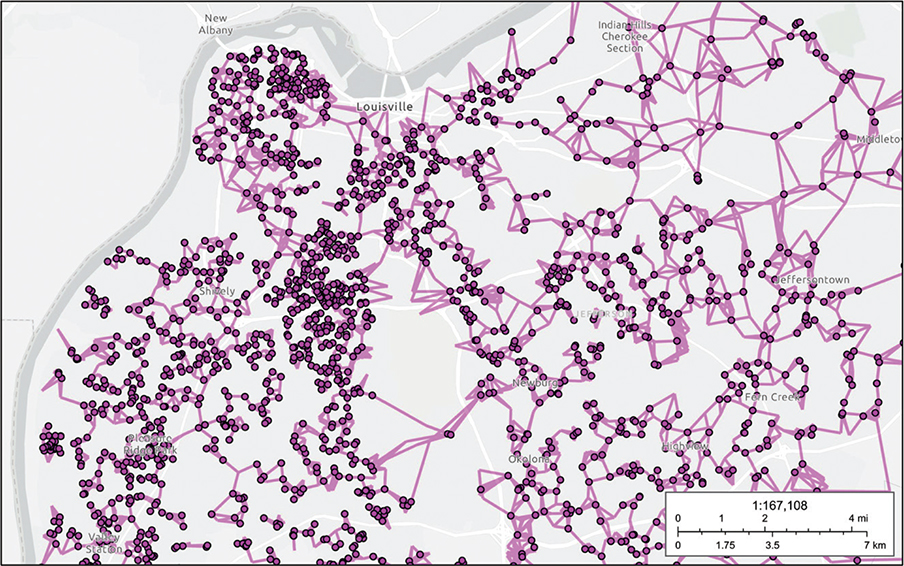
Fig. 4. Map depicting known cat locations (nodes) and known caregiver locations (solid dots) across part of the study site. Note that multiple cats are associated with some nodes. Lines depict distances between nodes and known caregivers.
Horn et al.,56 for example, documented a median home range of 34.3 ha (95% minimum convex polygon [MCP], equivalent radius: 330 m) for 16 unowned cats (14 of whom were intact, none of whom ‘behaved as if associated with dwellings’) trapped on the University of Illinois South Farms. The median home range of 11 owned cats (all sterilized) included in the same study was 0.4 ha (95% MCP, equivalent radius: 37 m).46 Analyzing data from 875 cats (nearly all of whom were sterilized pets), Kays et al.47 documented a median home range of 2.0 ha (95% MCP, equivalent radius: 80 m). Schmidt et al.55 documented a mean home range of 1.6 ha (100% MCP, equivalent radius: 71 m) among owned cats (n = 9, all sterilized) and 14.7 ha (100% MCP, equivalent radius: 216 m) among ‘feral’ cats (n = 14, all intact). The mean home range of 15 ‘semi-feral’ cats (at least 14 of which were intact, all were unowned but fed by residents) was 3.3 ha (100% MCP, equivalent radius: 102 m). Although these equivalent radii are generally smaller than our model results for the nearest (shelter strays) or second nearest (ACA cats and shelter strays) caregiver distances, the discrepancies are hardly so large as to be insurmountable. The extensive home ranges typically associated with intact cats make clear that they are capable of travel distances far larger than those implied by our model estimates. Based on years of careful observation, Nutter5 observed that ‘emigrating cats, whether intact or neutered, can join existing colonies’, a phenomenon we have seen firsthand as caregivers.
Importantly, our theoretical modeling corroborates and expands upon the findings of the empirical model. When applying various theoretical caregiver densities based on prior survey data,26,41–43,57 we found that even a relatively conservative estimate of 20% of households providing care for outdoor cats would result in 66.7% of known cat locations being within 126 meters of a theoretical caregiver, and 20.7% within 80 meters (distances derived from literature describing the home range of free-roaming cats,46,47 as observed previously). At a 30% caregiver density, those numbers rise to 78.6% and 47.7%, respectively. Interestingly, whether we considered cat locations or colony locations as independent points made little difference in these results.
We performed an additional test by comparing these findings to those from the empirical caregiver network, which indicated that the theoretical model – which assumed that theoretical caregivers were uniformly distributed over the study area – overestimated travel distances by a factor of approximately 3. This suggests that real-world caregiving tends to be more concentrated and accessible than the uniform distribution model assumes.
Observations on the general health of free-roaming cats
The robustness of both caregiver networks might help explain the general health of TNR cats, as documented in numerous studies. A study of a 2-year TNR program (2,366 cats total) in Alachua County, Florida, for example, reported that ‘euthanasia was performed for 11 (0.5%) debilitated cats’,23 while a similar study of 6 3-year, shelter-based TNR/RTF programs (involving a total of 72,970 cats) found that just 0.5% (349 cats) were euthanized for serious health concerns.26 A survey of 7 large-scale TNR organizations across the US revealed similar results: 0.4% (range: 0.03–0.7%) of the 103,643 cats for which records were available were euthanized ‘because of the presence of debilitating conditions, such as neoplasia, chronic inflammatory conditions, trauma, and infectious diseases’ observed during routine examinations.30
BCS, based on a 9-point scale ranging from 1 (emaciated) to 5 (ideal) to 9 (grossly obese), has also been used to assess the general health of TNR cats. Scores for 63 intact adult cats brought by caregivers to a TNR clinic in Alachua County ranged from 3 to 7 (medians varied seasonally at 4 or 5). A year following sterilization, median BCS for 14 of the study’s original cats had increased to 6.31 Observations of cats in Auckland, New Zealand, revealed that 64% of both ‘managed stray’ (i.e. with known caregivers, 210 cats total) and ‘unmanaged stray’ cats (i.e. without known caregivers, 253 total) received an ideal BCS (compared to 76% of indoor-outdoor pet cats). Scores were also assigned to coat condition, nose and eye discharge, ear crusting, and injuries, with the result that scores for stray cats were comparable to those for pet cats in all categories except coat condition.32
Implications for RTF and TNR programs
Our findings have critical implications for animal shelters, municipal agencies, and policymakers evaluating the use of RTF or TNR programs. One of the most persistent critiques of these programs is the claim that returning cats to their original location, particularly without a known caregiver, places the animals at unacceptable risk. Our study directly addresses this concern by demonstrating that in a well-established TNR community with robust caregiver participation, most cats, whether previously documented or not, are likely to be within a short distance of anthropogenic support. In this context, returning healthy cats to where they were found is not ‘dumping friendly, adoptable cats on the streets,35 as some have suggested; rather, the practice reflects an evidence-based assessment that caregiving resources are present and accessible.
For shelters that are reluctant to pursue or expand RTF or TNR due to perceived gaps in care, our findings offer an empirical counterpoint. In densely populated urban and suburban environments, especially those with existing TNR infrastructure, the presence of informal caregiving networks appears to be extensive enough to serve as a buffer, providing food – and in many instances, water and shelter – to free-roaming cats. These networks are often difficult to document in traditional shelter databases, yet they appear to play a critical and underappreciated role in animal welfare. The caregiver network concept developed in this study provides a method for visualizing and quantifying this support system, helping shelters make more informed, context-specific decisions about returning cats to where they were found following sterilization and vaccination.
Furthermore, our findings support the growing body of literature suggesting that anthropogenic food sources reduce predation pressure on wildlife by altering cats’ foraging behaviors.58,59 Thus, returning cats to areas where caregiving is likely not only improves outcomes for individual animals but may also have broader ecological benefits.
We also note that the duration of caregiver commitment may extend beyond the timeframe captured in this dataset (January 2020 to April 2023). Previous survey research14,60 has shown that many caregivers provide support to cats for several years, if not decades. This implies that the caregiver network described here is not only spatially dense but likely to be temporally stable, which further strengthens the case for RTF and TNR as viable, humane, and sustainable programs for managing free-roaming cats.
Limitations
This study does have limitations. Firstly, the sample of ACA caregivers and ‘stray’ cats from a single municipal shelter is, almost certainly, not representative of caregivers and shelters more generally; nor is Jefferson County representative of US communities more generally. Not all communities enjoy Jefferson County’s access to spay/neuter services, extensive caregiver network, or close collaboration between municipal shelter and TNR service provider. In addition, the study represents a snapshot in time. While we controlled for spatial accuracy and consistency, we cannot determine the extent to which caregivers stopped providing care during the study period (e.g. having moved away) or the extent to which new caregivers emerged. However, previous research found nearly two-thirds of ACA caregivers (64.6%) have been caring for community cats for at least 5 years,14 well in excess of this study’s 40-month period. This suggests that our findings are robust despite some (unknown) rate of caregiver turnover. In addition, our dataset includes only those caregivers who interacted with ACA, which almost certainly underrepresents the broader caregiving network. Indeed, many individuals may provide intermittent or informal care for cats without ever engaging with TNR programs, as has been observed in previous studies.41,42,44,45,57
Our models included the Ohio River as a physical barrier to caregiver proximity, other structural and environmental features (e.g. highways, railroads, or large commercial zones) may pose real, albeit unmeasured, impediments to cat movement. We also acknowledge that Euclidean distance does not account for route feasibility, elevation, fencing, or other constraints that could influence actual travel paths. In addition, much of our analysis treated cat locations as independent despite cats often congregating in groups.
Moreover, our theoretical modeling assumed an even distribution of theoretical caregivers across space, which oversimplifies reality. In addition, our identification of second nearest caregivers is based primarily on proximity, along with reasonable assumptions of caregiver density drawn from the literature; we do not know the level of care that might be provided by such individuals. In other words, we cannot assume that these are ‘backup caregivers’. That said, our testing of the model using known caregiver locations suggests that this assumption leads to overestimation of distance to theoretical caregivers – meaning that our estimates err on the side of caution.
And finally, it is worth noting that the uniform-distribution assumption might overestimate distances relative to the observed pattern among ACA cats, whereas Euclidean distance may underestimate the actual travel distance required because it does not account for route feasibility or physical barriers. Because these effects operate in opposite directions, the net direction and magnitude of the related biases are uncertain.
Conclusion
Our results suggest that most cats in Jefferson County are located within distances that are reasonably consistent with well-documented feline home ranges and foraging behavior in urban and suburban environments. The general availability of resources revealed by these findings might help explain the results of previous research (and considerable anecdotal evidence) documenting the good general health of community cats.
Authors’ contributions
Sue M. Neal: conceptualization, analysis, and writing. Peter J. Wolf: analysis and writing.
Acknowledgments
The authors would like to acknowledge the invaluable assistance from Alley Cat Advocates’ Karen Little, in the project design and initial data collection.
References
| 1. | Houser SK. Prodigal Pets: A History of Animal Sheltering in America and the Origin of the No-Kill Movement. 2018. Accessed June 26, 2024. https://www.outthefrontdoor.com/prodigal-pets |
| 2. | Gunther I, Hawlena H, Azriel L, Gibor D, Berke O, Klement E. Reduction of Free-Roaming Cat Population Requires High-Intensity Neutering in Spatial Contiguity to Mitigate Compensatory Effects. P Natl Acad Sci Biol. 2022;119(15):e2119000119. doi: 10.1073/pnas.2119000119 |
| 3. | Luzardo OP, Vara-Rascón M, Dufau A, Infante E, Travieso-Aja MDM. Four Years of Promising Trap–Neuter–Return (TNR) in Córdoba, Spain: A Scalable Model for Urban Feline Management. Animals. 2025;15(4):4. doi: 10.3390/ani15040482 |
| 4. | Natoli E, Maragliano L, Cariola G, et al. Management of Feral Domestic Cats in the Urban Environment of Rome (Italy). Prev Vet Med. 2006;77(3–4):180–185. doi: 10.1016/j.prevetmed.2006.06.005 |
| 5. | Nutter FB. Evaluation of a Trap-Neuter-Return Management Program for Feral Cat Colonies: Population Dynamics, Home Ranges, and Potentially Zoonotic Diseases. North Carolina State University; 2005. Accessed Oct 25, 2023. http://www.carnivoreconservation.org/files/thesis/nutter_2005_phd.pdf |
| 6. | Spehar DD, Wolf PJ. An Examination of an Iconic Trap-Neuter-Return Program: The Newburyport, Massachusetts Case Study. Animals. 2017;7(11):81. doi: 10.3390/ani7110081 |
| 7. | Spehar DD, Wolf PJ. A Case Study in Citizen Science: The Effectiveness of a Trap-Neuter-Return Program in a Chicago Neighborhood. Animals. 2018;8(1):14. doi: 10.3390/ani7110081 |
| 8. | Spehar DD, Wolf PJ. Back to School: An Updated Evaluation of the Effectiveness of a Long-Term Trap-Neuter-Return Program on a University’s Free-Roaming Cat Population. Animals. 2019;9(10):768. doi: 10.3390/ani9100768 |
| 9. | Tan K, Rand J, Morton J. Trap-Neuter-Return Activities in Urban Stray Cat Colonies in Australia. Animals. 2017;7(6):46. doi: 10.3390/ani7060046 |
| 10. | Benka VA, Boone JD, Miller PS, et al. Guidance for Management of Free-Roaming Community Cats: A Bioeconomic Analysis. J Feline Med Surg. 2021;24(10):975–985. doi: 10.1177/1098612X211055685 |
| 11. | Wolf PJ, Weedon GR. An Inconvenient Truth: Targeted TNR Enjoys a Track Record Unmatched by Lethal Methods for Managing Free-Roaming Cats. J Shelter Med Community Anim Health. 2023;2:1. doi: 10.56771/jsmcah.v2.68 |
| 12. | Wolf PJ, Schaffner JE. The Road to TNR: Examining Trap-Neuter-Return Through the Lens of Our Evolving Ethics. Front Vet Sci. 2019;5:341. doi: 10.3389/fvets.2018.00341 |
| 13. | AAFP. 2023 AAFP Free-Roaming Cat Position Statement. J Feline Med Surg. 2023;25(5):1098612X231173791. doi: 10.1177/1098612X231173791 |
| 14. | Neal SM, Wolf PJ. A Cat Is a Cat: Attachment to Community Cats Transcends Ownership Status. J Shelter Med Community Anim Health. 2023;2:62. doi: 10.56771/jsmcah.v2.62 |
| 15. | Scotney R, Rand J, Rohlf V, Hayward A, Bennett P. The Impact of Lethal, Enforcement-Centred Cat Management on Human Wellbeing: Exploring Lived Experiences of Cat Carers Affected by Cat Culling at the Port of Newcastle. Animals. 2023;13(2):2. doi: 10.3390/ani13020271 |
| 16. | Mitchell T. Program Gives Feral Cats Shot at Freedom. The Florida Times-Union. November 19, 2008. Accessed June 2, 2024. https://www.jacksonville.com/story/entertainment/television/2008/11/20/stub-256/16005331007/ |
| 17. | Heath D. Reset: How to Change What’s Not Working. Avid Reader Press/Simon & Schuster; 2025. Accessed Aug 10, 2025. https://www.simonandschuster.com/books/Reset/Dan-Heath/9781668062098 |
| 18. | Johnson KL, Cicirelli J. Study of the Effect on Shelter Cat Intakes and Euthanasia from a Shelter Neuter Return Project of 10,080 Cats from March 2010 to June 2014. PeerJ. 2014;2:e646. doi: 10.7717/peerj.646 |
| 19. | Edinboro CH, Watson HN, Fairbrother A. Association between a Shelter-Neuter-Return Program and Cat Health at a Large Municipal Animal Shelter. J Am Vet Med Assoc. 2016;248(3):298–308. doi: 10.2460/javma.248.3.298 |
| 20. | Hamilton F. Implementing Nonlethal Solutions for Free-Roaming Cat Management in a County in the Southeastern United States. Front Vet Sci. 2019;6:259. doi: 10.3389/fvets.2019.00259 |
| 21. | Wolf PJ, Hamilton FE. Reforming Urban U.S. Animal Shelters: It’s (Not) Like Herding Cats. J Urban Affairs. 2019;44(2):221–242. |
| 22. | Kreisler RE, Pugh AA, Pemberton K, Pizano S. The Impact of Incorporating Multiple Best Practices on Live Outcomes for a Municipal Animal Shelter in Memphis, TN. Front Vet Sci. 2022;9:786866. doi: 10.3389/fvets.2022.786866 |
| 23. | Levy JK, Isaza NM, Scott KC. Effect of High-Impact Targeted Trap-Neuter-Return and Adoption of Community Cats on Cat Intake to a Shelter. Vet J. 2014;201(3):269–274. doi: 10.1016/j.tvjl.2014.05.001 |
| 24. | Mauro K, Wolf PJ. Playing the Cards You’re Dealt: Implementing Feline Lifesaving Programs and Practices Despite Restrictive Ordinance Provisions. J Shelter Med Community Anim Health. 2024;3:49. doi: 10.56771/jsmcah.v3.49 |
| 25. | Spehar DD, Wolf PJ. The Impact of an Integrated Program of Return-to-Field and Targeted Trap-Neuter-Return on Feline Intake and Euthanasia at a Municipal Animal Shelter. Animals. 2018;8(4):55. doi: 10.3390/ani8040055 |
| 26. | Spehar DD, Wolf PJ. Integrated Return-to-Field and Targeted Trap-Neuter-Vaccinate-Return Programs Result in Reductions of Feline Intake and Euthanasia at Six Municipal Animal Shelters. Front Vet Sci. 2019;6:77. doi: 10.3389/fvets.2019.00077 |
| 27. | Hurley KF, Levy JK. Rethinking the Animal Shelter’s Role in Free-Roaming Cat Management. Front Vet Sci. 2022;9:847081. doi: 10.3389/fvets.2022.847081 |
| 28. | Dalrymple AM, Stively NE, Kreisler R. Tag! You’re Home! Reunification of Pet Cats with Their Owners Using a Community Engagement Approach: A Community Case Report. J Shelter Med Community Anim Health. 2025;3:113. doi: 10.56771/jsmcah.v3.113 |
| 29. | Schiefer CA, Spera K, Crawford PC, Levy JK. Trap–Neuter–Return and Return-to-Field Programs for Managing Community Cats at Florida Animal Shelters. J Shelter Med Community Anim Health. 2025;4:1. doi: 10.56771/jsmcah.v4.126 |
| 30. | Wallace JL, Levy JK. Population Characteristics of Feral Cats Admitted to Seven Trap-Neuter Programs in the United States. J Feline Med Surg. 2006;8:279–284. doi: 10.1016/j.jfms.2006.02.004 |
| 31. | Scott KC, Levy JK, Gorman SP, Neidhart SMN. Body Condition of Feral Cats and the Effect of Neutering. J Appl Anim Welf Sci. 2002;5(3):203–213. doi: 10.1207/S15327604JAWS0503_04 |
| 32. | Zito S, Walker J, Gates MC, Dale A. A Preliminary Description of Companion Cat, Managed Stray Cat, and Unmanaged Stray Cat Welfare in Auckland, New Zealand Using a 5-Component Assessment Scale. Front Vet Sci. 2019;6:40. doi: 10.3389/fvets.2019.00040 |
| 33. | August JW. Humane Society’s ‘Community Cat’ Plan Stirs Controversy Despite Scientific Support. Times of San Diego. August 18, 2022. Accessed July 9, 2023. https://timesofsandiego.com/life/2022/08/17/humane-societys-community-cat-plan-stirs-controversy-despite-scientific-support/ |
| 34. | Trageser C. San Diego Humane Society Releasing More Cats to Streets. KPBS Public Media. May 19, 2021. Accessed Dec 28, 2023. https://www.kpbs.org/news/midday-edition/2021/05/19/san-diego-humane-society-releasing-more-stray-cats |
| 35. | Bacal KA. Pet Assistance Foundation v. San Diego Humane Society and SPCA. Superior Court of California; 2025. |
| 36. | Times of San Diego. Judge Clears Way for Humane Society Cat Program after Legal Battle. Times of San Diego. June 11, 2025. Accessed Nov 9, 2025. https://timesofsandiego.com/life/2025/06/11/judge-clears-way-humane-societys-community-cat-program-legal-battle/ |
| 37. | U.S. Census Bureau. QuickFacts: Jefferson County, Kentucky. 2023. Accessed Jul 22, 2023. https://www.census.gov/quickfacts/fact/table/jeffersoncountykentucky/PST045222 |
| 38. | American Legal Publishing. Animal Ordinance–Louisville-Jefferson. Louisville, KY. 2024. Accessed Nov 30, 2024. https://codelibrary.amlegal.com/codes/louisvillemetro/latest/loukymetro/0-0-0-7177 |
| 39. | Spehar DD, Wolf PJ. The Impact of Return-to-Field and Targeted Trap-Neuter-Return on Feline Intake and Euthanasia at a Municipal Animal Shelter in Jefferson County, Kentucky. Animals. 2020;10(8):8. doi: 10.3390/ani10081395 |
| 40. | Neal SM, Wolf PJ, Anderson ME. Geospatial Model Suggests Sterilizing Free-Roaming Domestic Cats Reduces Potential Risk of Toxoplasma gondii Infection. Zoonotic Dis. 2025;5(3):24. doi: 10.3390/zoonoticdis5030024 |
| 41. | Neal SM, Kremer T. Who Cares? Exploring the Demographics and Proportion of People Providing Care for Community Cats in Seven Study Communities in the United States. J Shelter Med Community Animal Health. 2024;3(1):71. doi: 10.56771/jsmcah.v3.71 |
| 42. | Levy JK, Woods JE, Turick SL, Etheridge DL. Number of Unowned Free-Roaming Cats in a College Community in the Southern United States and Characteristics of Community Residents Who Feed Them. J Am Vet Med Assoc. 2003;223(2):202–205. doi: 10.2460/javma.2003.223.202 |
| 43. | Kass PH, Johnson KL, Weng HY. Evaluation of Animal Control Measures on Pet Demographics in Santa Clara County, California, 1993–2006. PeerJ. 2013;1:e18. doi: 10.7717/peerj.18 |
| 44. | APPA. 2017–2018 APPA National Pet Owners Survey. American Pet Products Association; 2018. |
| 45. | APPA. 2019–2020 APPA National Pet Owners Survey. American Pet Products Association; 2020. |
| 46. | Horn JA, Mateus-Pinilla N, Warner RE, Heske EJ. Home Range, Habitat Use, and Activity Patterns of Free-Roaming Domestic Cats. J Wildl Manage. 2011;75(5):1177–1185. doi: 10.1002/jwmg.145 |
| 47. | Kays R, Dunn RR, Parsons AW, et al. The Small Home Ranges and Large Local Ecological Impacts of Pet Cats. Animal Conservation. 2020;23(5):12563. doi: 10.1111/acv.12563 |
| 48. | Barratt DG. Home Range Size, Habitat Utilisation and Movement Patterns of Suburban and Farm Cats Felis Catus. Ecography. 1997;20(3):271–280. doi: 10.1111/j.1600-0587.1997.tb00371.x |
| 49. | Liberg O, Sandell M, Pontier D, Natoli E. Density, Spatial Organisation and Reproductive Tactics in the Domestic Cat and Other Felids. In: Turner DC, Bateson PPG, eds. The Domestic Cat: The Biology of Its Behaviour. Cambridge University Press; 2000:119–147. |
| 50. | Wong D. The Modifiable Areal Unit Problem (MAUP). In: Fotheringham AS, Rogerson PA, eds. The SAGE Handbook of Spatial Analysis. SAGE Publications; 2008:105–124. Accessed Nov. 20, 2025. https://books.google.com/books?id=phEgXfbCU_YC |
| 51. | Bissonnette V, Lussier B, Doizé B, Arsenault J. Impact of a Trap-Neuter-Return Event on the Size of Free-Roaming Cat Colonies around Barns and Stables in Quebec: A Randomized Controlled Trial. Can J Vet Res. 2018;82(3):192–197. |
| 52. | Castillo D, Clarke AL. Trap/Neuter/Release Methods Ineffective in Controlling Domestic Cat ‘Colonies’ on Public Lands. Nat Areas J. 2003;23(3):247–253. |
| 53. | Gunther I, Raz T, Klement E. Association of Neutering with Health and Welfare of Urban Free-Roaming Cat Population in Israel, during 2012–2014. Prev Vet Med. 2018;157:26–33. doi: 10.1016/j.prevetmed.2018.05.018 |
| 54. | Ferreira GA, Machado JC, Nakano-Oliveira E, Andriolo A, Genaro G. The Effect of Castration on Home Range Size and Activity Patterns of Domestic Cats Living in a Natural Area in a Protected Area on a Brazilian Island. Appl Anim Behav Sci. 2020;230:105049. doi: 10.1016/j.applanim.2020.105049 |
| 55. | Schmidt PM, Lopez RR, Pierce BL. Estimating Free-Roaming Cat Densities in Urban Areas: Comparison of Mark-Resight and Distance Sampling. Wildlife Biol Pract. 2007;3(1):18–27. doi: 10.2461/wbp.2007.3.3 |
| 56. | Horn JA. Home Range, Habitat Use, and Activity Patterns of Free-Ranging Domestic Cats. Master of Science in Natural Resources and Environmental Sciences, University of Illinois at Urbana-Champaign; 2009. |
| 57. | Lord LK. Attitudes toward and Perceptions of Free-Roaming Cats among Individuals Living in Ohio. J Am Vet Med Assoc. 2008;232(8):1159–1167. doi: 10.2460/javma.232.8.1159 |
| 58. | Cove MV, Gardner B, Simons TR, Kays R, O’Connell AF. Free-Ranging Domestic Cats (Felis catus) on Public Lands: Estimating Density, Activity, and Diet in the Florida Keys. Biol Invasions. 2018;20(2):333–344. doi: 10.1007/s10530-017-1534-x |
| 59. | Silva-Rodríguez EA, Sieving KE. Influence of Care of Domestic Carnivores on Their Predation on Vertebrates. Conserv Biol. 2011;25(4):808–815. doi: 10.1111/j.1523-1739.2011.01690.x |
| 60. | Zasloff LR, Hart LA. Attitudes and Care Practices of Cat Caretakers in Hawaii. Anthrozoös. 1998;11(4):242–248. doi: 10.2752/089279398787000599 |