ORIGINAL RESEARCH ARTICLE
Who Let the Dogs Out? A Cross-Sectional Knowledge, Attitudes, and Practices Survey Reveals Caregiver Behavior and a Value-Action Gap in Ownership Practices as Potential Contributors to Free-Roaming Dog Populations in Fiji
Casey Quimby1,2, Jasmine Dhillon3,4, Tomasi Niuvotu Tunabuna5 and Jessica H. Hoopes1,2,3*
1Animals Fiji, Lautoka, Fiji; 2The Pacific Islands Animal Advocacy Alliance (TPIAAA), Nadi, Fiji; 3Veterinarians Abroad Supporting and Teaching (VAST), Saskatchewan, Canada; 4Canadian Food Inspection Agency, Ottawa, Canada; 5Animal Health and Production, Ministry of Agriculture and Waterways, Suva, Fiji
Abstract
Introduction: Free-roaming dogs (FRD) are common in villages and urban areas across Fiji, and managing these populations presents significant challenges. Developing sustainable dog population management (DPM) programs requires an in-depth understanding of how ownership practices and human behaviors influence dog population dynamics. This study aimed to establish a framework for understanding dog demographics, dog bite incidence and the socio-behavioral factors contributing to dog overpopulation and the maintenance of FRD populations in Fiji.
Methods: A cross-sectional, door-to-door household knowledge, attitudes, and practices (KAP) survey was conducted to evaluate the size and dynamics of the owned dog population, dog ownership practices, public knowledge and attitudes toward dogs, and the incidence of dog bites in households in Tavakubu Ward, Lautoka, Fiji.
Results: More than one-third of households (37%) owned a dog for companionship or protection, with over half of households (54%) reporting feeding dogs they did not own. Few respondents supported the use of control measures involving confinement or culling, and owner uptake of rehoming services was low. Despite positive attitudes toward preventive care, desexing (sterilization), and licensing, adoption of these practices remained low. A lack of awareness of the importance of desexing and licensing was reported as a key barrier to uptake.
Conclusion: Historical methods of dog population control in Fiji, such as indiscriminate culling and rehoming, may not align with contemporary community attitudes and ownership practices. Results suggest high levels of caregiver behavior and community dog feeding, compounded by low desexing rates, and limited confinement of owned dogs, likely contribute to Fiji’s FRD population. Participants’ responses also reveal a clear value-action gap in responsible pet ownership, where community attitudes do not consistently translate into everyday practice. Therefore, identifying and addressing barriers to evidence-based responsible dog ownership practices and incorporating sustainable, community-led strategies for dog management will be an important step in improving the effectiveness of DPM programs in Fiji.
Keywords: dog; population management; Fiji; demographics; KAP analysis; ownership practices
Citation: Journal of Shelter Medicine and Community Animal Health 2026, 5: 166 - http://dx.doi.org/10.56771/jsmcah.v5.166
Copyright: © 2026 Casey Quimby et al. This is an Open Access article distributed under the terms of the Creative Commons Attribution 4.0 International License (http://creativecommons.org/licenses/by/4.0/), allowing third parties to copy and redistribute the material in any medium or format and to remix, transform, and build upon the material for any purpose, even commercially, provided the original work is properly cited and states its license.
Received: 3 December 2025; Revised: 11 March 2026; Accepted: 14 March 2026; Published: 7 May 2026
Competing interests and funding: JH is employed as the One Health Research Coordinator for Animal Management in Rural and Remote Indigenous Communities (AMRRIC). However, this research was conducted independently of her employment and without any involvement or influence from the employer. The remaining authors declare no other conflicts of interest.
Correspondence: *Jessica H. Hoopes. Email: jessica_hoopes@hotmail.com
Reviewers: Barbara E. Laderman-Jones, Sara White
Supplementary material: Supplementary material for this article can be accessed here.
Domestic dogs were first introduced to Fiji before European colonization, around 950 CE,1 and have become a salient feature in cities, towns, and villages across the island nation. In modern times, dogs play a versatile role in Fijian society, ranging from loyal companions to working dogs used for pig hunting and guarding the household. Despite the potential benefits of dog ownership,2 large free-roaming dog (FRD) populations are common in many urban areas and villages. Managing these populations presents an ongoing challenge, as unmanaged FRD populations can adversely affect dog welfare and the health and well-being of community members, other domestic animals, and local wildlife.3
Nationally, the primary motivations for managing FRD populations have centered around dog-human conflict and livestock predation. While the public health effects associated with Fiji’s dog population are not captured in the published literature, dog attacks, bite injuries, and public fear caused by aggressive dog behavior have been widely reported in mainstream media,4–8 often driving reflex interventions to manage FRDs. In the last two decades, growing concerns around dog attacks on livestock, such as calves, sheep and goats,9–14 have placed added pressure on national and local governments to address the issues surrounding FRDs. Historically, these concerns have prompted government authorities to employ various methods of population control, including poisoned baits, trapping and euthanasia of FRDs.12,13,15–18 Concurrently, animal welfare-focused approaches in Fiji have mainly relied on sheltering and rehoming, with four registered non-profit animal sheltering organizations currently operating nationwide. More recently, collaborative outreach desexinga (sterilization) programs, primarily targeting owned animals, have been implemented in several locations across the country, providing free or low-cost desexing services. However, resource limitations often restrict the scope and scale of these programs. Despite these efforts, FRDs remain widespread in many parts of Fiji, with enduring debate among stakeholders and community members over effective dog management approaches.
Internationally, there is growing evidence of dog management strategies addressing only the immediate symptoms of overpopulation (such as culling or rehoming), are unlikely to achieve sustainable, long-term reductions in FRD populations.20–23 This underscores the importance of identifying and addressing the root causes of overpopulation as part of a sustainable dog population management (DPM) strategy.22,24,25 Domestic dogs are adapted to human proximity and typically rely, directly or indirectly, on humans for resources.26–28 Given the close association between dog ecology and human activity, DPM must be accompanied by changes in human behavior22 to control access to resources and address sources of new or replacement animals. This requires an in-depth understanding of the dynamics of the local dog populations, as well as ownership practices and caregiver behaviors that contribute to the establishment and maintenance of FRDs. As such, identifying these factors as part of a comprehensive baseline assessment is essential for informing the development of effective, sustainable DPM programs.
The current analysis was part of a broader exploratory research project aimed at developing a framework for baseline data collection and support monitoring and evaluation of DPM programs in Fiji. The overall study encompassed a behavioral prioritization matrix, street dog population surveys and a household knowledge, attitudes and practices (KAP) survey to assess the size and dynamics of the owned and FRD populations alongside public KAPs that may influence FRDs and DPM programs in Fiji. Here, we report findings from a household KAP survey conducted in Tavakubu, Fiji, which evaluated the demographics of the owned dog population, ownership practices, public attitudes toward dogs and dog bite incidence, as part of the larger study to inform evidence-based DPM programs in Fiji.
Methods
Study area
The Republic of Fiji is an island nation located in Melanesia, a region within Oceania in the South Pacific Ocean. The study was conducted in Tavakubu Ward, Lautoka City, Ba Province, Western Division, located on the northwest side of Viti Levu, Fiji’s largest island (Fig. 1). This study site was selected for its high human population density and proximity to the headquarters of one of the country’s principal animal welfare organizations (Animals Fiji; www.animalsfiji.org), permitting the research to inform the development of evidence-based interventions. Summation of population data from the ward’s constituent enumeration zones based on the 2017 Census from the Fiji Bureau of Statistics32 identified a total population of 11,644 people across 2,591 households.
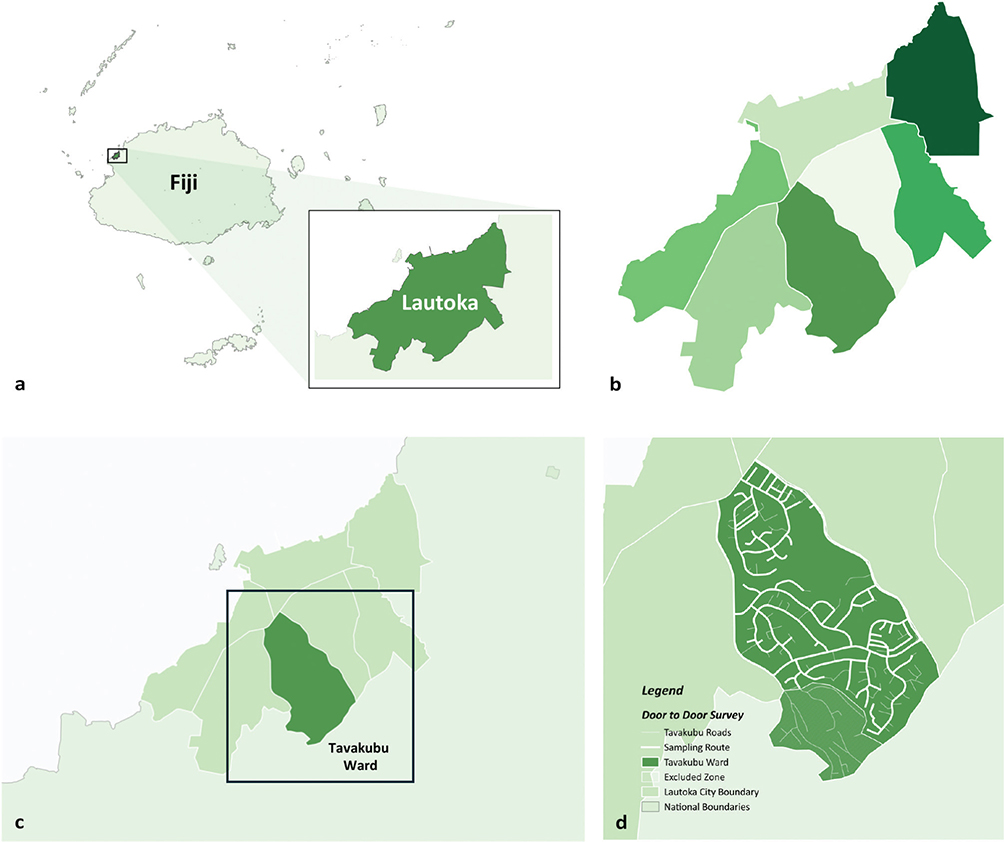
Fig. 1. (a) Map of Fiji showing the location of Lautoka (Ba Province, Western Division. (b) Lautoka’s constituent neighborhood zones manually delineated in QGIS using their constituent Enumeration Areas from the 2017 Fiji Bureau of Statistics Population and Housing Census (PopG IS, Pacific Community, 2017)29 and Ward boundaries.30 (c) Map of Lautoka highlighting Tavakubu Ward. (d) Pre-defined route used for door-to-door surveys. The excluded zone (bottom left) indicates a section of road with restricted access during data collection. National administrative boundaries and road networks sourced from OpenStreetMap (OpenStreetMap Foundation, 2024).31 Lautoka administrative boundaries and neighborhood zones were manually created in QGIS (QGIS Development Team, Version 3.34 LTR, 2023) by adapting Enumeration Area boundaries from the 2017 Fiji Population and Housing Census.
Study design
A structured household questionnaire, developed in line with guidance from the International Companion Animal Management Coalition (ICAM)33 and modeled after a similar study in Canada,34 was used to assess the size and demographics of the owned dog population, as well as related KAP (Supplementary Information [S1]). The survey instrument was originally created for administrative use in Papua New Guinea and subsequently reviewed and refined by multiple staff and representatives from two local veterinary and animal welfare organizations (Animals Fiji and the SPCA Fiji Islands). This ensured cultural and contextual relevance and supported content validity and alignment with local concerns and beliefs regarding dogs and dog management.
The questionnaire comprised four sections: (1) basic household information, (2) dog bite incidence in the past 12 months, (3) dog ownership and ownership practices, and (4) knowledge and attitudes around dogs and dog ownership, with a single question on cat ownership. The questionnaire primarily consisted of multiple-choice questions with or without a write-in ‘Other’ option and Likert scale items. Short-answer questions were included to provide detail not suited to predefined options or where there was insufficient information available to establish categories (e.g. dog bite treatments and circumstances surrounding the bite). Write-in responses to items with an ‘Other’ option were grouped based on common themes for further analysis.
Dog ownership practices included self-reported behaviors related to dog ownership and management and were largely measured using yes/no, multiple choice and frequency questions, with responses summarized as the proportion of individuals reporting each practice. Knowledge and attitude questions were used to capture awareness, beliefs, and community perceptions, using Likert-scale responses, allowing different aspects of the KAP to be treated as distinct variables in the analysis.
Likert-scale items included one behavioral practice question, four knowledge questions, and 35 attitude statements. Responses to these items were recorded using a 5-point Likert scale ranging from 1 (‘Strongly Disagree’) to 5 (‘Strongly Agree’). Responses to knowledge items were dichotomized for analysis. Responses of ‘Agree’ or ‘Strongly Agree’ were coded as ‘correct’ (1), while ‘Don’t Know’, ‘Disagree’ or ‘Strongly Disagree’ were coded as ‘incorrect’ (0) for descriptive analysis and total knowledge scoring. In response to anecdotal reports of dog meat consumption in Fiji, a single practice question on dog meat consumption was included to better understand potential public health risks, including the potential for inadvertent human exposure to toxic baits and euthanasia agents. Acknowledging that this topic may be of a socially sensitive nature, the item was framed as a Likert-style agreement statement to reduce perceived judgment.
To facilitate meaningful coding for KAP scoring, attitude statements were thematically grouped into five domains: general attitudes toward dogs, owner responsibilities, DPM activities, perceptions of stray and FRD and health risks and public safety concerns. The constructs underlying each thematic domain, scoring interpretation and parameters for reverse coding for each domain are outlined in Table 1. Reverse coding was only applied during the calculation of KAP scores to allow higher scores could consistently reflect the desired construct. Descriptive reporting of the proportion of agreement presented in text and figures reflects the items’ original phrasing.
To simplify descriptive analysis of Likert-scale items in text summaries, responses were aggregated by combining ‘Agree’ with ‘Strongly agree’ into a single category (‘agreed’) and ‘Disagree’ with ‘Strongly disagree’ into a single category (‘disagreed’).
For the purpose of this study, ‘responsible dog ownership’ was defined as practices by which owners meet the behavioral, environmental and physical needs of their dogs while minimizing risks to the community, other animals or their shared environment, as outlined in the World Organization for Animal Health (WOAH) Terrestrial Code (Chapter 7.7).35
Sample population
The cross-sectional, door-to-door survey was completed between July 12 and September 7, 2023. The survey instrument was delivered verbally by trained staff and volunteers from Animals Fiji, and responses were recorded electronically on portable tablets using an online survey platform (Survey Planet, Survey Planet LLC, 2024). Households were selected along a pre-established route used concurrently to conduct street dog survey counts (Fig. 1d), with volunteers approaching every eighth household. If there was no response or if the household declined to participate, neighboring households were approached until an eligible respondent was available. The inclusion criteria limited participation to Fiji residents aged 18 years or older and included both dog-owning households (DOH) and non-dog-owning households (NDOH). Both completed questionnaires and partially completed responses that progressed beyond the demographics section were included in the analysis. Using the EpiTools (Austvet, 2024) sample size calculator and results from the 2017 Census32 (2,591 households), a sample size of 143–488 households was required to achieve a 95% confidence interval and 4–8% margin of error for an assumed proportion of 0.5 (50%) DOHs. This proportion was chosen in line with standard conservative practice in veterinary epidemiology when the true proportion for a population is unknown, as the variance of a proportion is highest at 0.5, yielding the largest required sample size for a given level of precision and confidence.36
Data analysis
Descriptive analyses, including frequencies, percentages, means, medians, ranges, KAP Scores, odds ratios, and Cronbach’s alpha, were performed using Microsoft®Excel (Microsoft Corporation, 2024). As part of the survey, respondent households were asked if they fed a dog they did not ‘own’ and the number of dogs fed, recorded as either a number or a range. For ranges (e.g. 6–8 dogs), the highest value in the range was used in calculations. For responses such as ‘greater than 10’, the highest identified number (e.g. 10) was used for subsequent analyses. For knowledge items, total knowledge scores were calculated by summing the dichotomized item responses (‘correct’ = 1, ‘incorrect’ = 0). For attitude items, mean KAP scores (range 1–5) were first calculated for individual items to capture respondent-level agreement (Table 2), with higher scores reflecting the construct of interest. For the general attitudes toward dogs domain, item-level scores were combined to calculate a domain KAP score, which is used as summary measure of the respondents’ overall attitudes toward dogs. Given the assumed low heterogeneity within this domain, internal consistency was evaluated using Cronbach’s alpha,37,38 which provides an indication of the reliability of the survey instrument. Thematic domains with greater conceptual diversity were summarized using descriptive statistics as outlined above. Odds ratios were calculated to assess associations between categorical variables. Given the presence of small cell counts in some analyses, statistical significance was evaluated using Fisher’s exact test, and exact (conditional) 95% confidence intervals were calculated for odds ratios.
| No. | Statement | Reverse coded | Mean KAP score | Standard deviation | |
| General attitudes toward dogs | |||||
| 1 | I like dogs | No | 3.5 | 1.0 | |
| 2 | Dogs are a member of the family | No | 3.9 | 0.5 | |
| 3 | A dog is a valuable possession | No | 3.5 | 0.9 | |
| 4 | People should treat dogs with as much respect as their human family | No | 4.0 | 0.6 | |
| 5 | Having a dog increases security | No | 4.0 | 0.3 | |
| 6 | The welfare of dogs is important to me | No | 3.3 | 1.0 | |
| 7 | Dogs should have the same rights and privileges as humans | No | 3.4 | 0.9 | |
| 8 | I am afraid of dogs | Yes | 2.9 | 1.1 | |
| 9 | Having a dog is a waste of money | Yes | 3.6 | 0.8 | |
| 10 | I don’t like being close to dogs | Yes | 2.9 | 1.1 | |
| Owner responsibilities | |||||
| 11 | People who own dogs are responsible for making sure they are healthy and happy | No | 4.1 | 0.3 | |
| 12 | If a dog has puppies, it is the owner’s responsibility to care for them | No | 4.1 | 0.3 | |
| 13 | Owners should keep their dog, even if it has attacked peoplea | Yes | 2.6 | 0.8 | |
| 14 | Dogs should be allowed indoors | No | 2.5 | 0.9 | |
| 15 | Dogs should always be kept outside the house | Yes | 2.9 | 1.0 | |
| 16 | If my female dog had puppies, I would not want to keep any of them | Yes | 2.8 | 0.9 | |
| Dog population management activities | |||||
| 17 | I think that dogs should be desexed to prevent unwanted puppies | No | 3.8 | 0.7 | |
| 18 | I think tying up a dog on a chain is cruel | Yes | 3.0 | 1.0 | |
| 19 | Poisoning or baiting dogs is an acceptable method of population control | No | 1.9 | 0.8 | |
| 20 | Street dogs should not be allowed to breed | No | 3.7 | 0.7 | |
| 21 | People should not feed the stray dogsb | No | 2.6 | 0.9 | |
| 22 | Desexing (spaying or neutering) to prevent the birth of puppies is cruel and inhumane | Yes | 3.6 | 0.9 | |
| 23 | There is no need to desex male dogs | Yes | 3.4 | 0.8 | |
| 24 | Euthanizing a dog for medical reasons is cruel | Yes | 3.3 | 0.7 | |
| 25 | If a dog is sick, it should be allowed to die naturally, even if it is suffering | Yes | 3.4 | 0.7 | |
| 26 | It is not acceptable to kill dogs | Yes | 2.0 | 0.5 | |
| Perceptions on stray and free-roaming dogs | |||||
| 27 | Street dogs should be looked after by the community | No | 3.3 | 1.0 | |
| 28 | Dogs should be allowed to roam freely | No | 2.8 | 1.0 | |
| 29 | I like having dogs around on my street | No | 2.6 | 0.9 | |
| 30 | I think that there are too many dogs in my neighborhood | Yes | 2.0 | 0.7 | |
| 31 | I think that stray dogs are a problem in this country | Yes | 2.0 | 0.6 | |
| Health risks and public safety concerns | |||||
| 32 | Dogs are dangerous to people | No | 3.5 | 0.9 | |
| 33 | If my dog got sick or got mange, I would not want it around the house | No | 3.0 | 0.9 | |
| 34 | It is unhealthy to touch dogs | No | 2.9 | 1.0 | |
| 35 | Street dogs are not dangerous to people | Yes | 3.7 | 0.8 | |
| Reverse coding for KAP scores was applied as outlined in Table 1. KAP: knowledge, attitudes, and practices. aThis item was reverse-coded as agreement with keeping dogs that have attacked people reflects lower support for responsible pet ownership, as defined in this study. bThis item was not reverse-coded as agreement with the statement with not feeding dogs aligns with dog management strategies that control access to resources. |
|||||
Ethics
This research was approved by the Fiji Ministry of Agriculture (MOA 12/1) and the Fiji National Health Research Ethics Review Committee (FFHREC) at the Fiji Ministry of Health (FNHRERC Number 02/2023).
Results
Participants’ demographics
Of the 262 houses approached to participate in the survey, 219 households consented, yielding a response rate of 84%, and comprising 8.5% of households within the ward. Of the 219 households providing demographic information (Table 3), the majority of respondents (85%) lived in detached houses, with most households consisting of 6–10 people (47%) or 3–5 people (39%), compared to a national average household size of 4.6.39 Most respondents were identified as iTaukei (58%) or Indo-Fijian (39%). Christianity (68%) and Hinduism (26%) were the primary religions practiced by the sample population which aligns with national statistics.40 Demographic data were used to compare alignment of the sample population with national census data.
Dog bite injuries
Fourteen households (6%; 14/219) reported at least one household member had been bitten by a dog in the preceding 12 months. Across these households, 17 dog bite victims were identified, corresponding to an average of 0.08 people bitten per household surveyed. Where data on the sex of the victims were reported (n = 14), males represented a slightly larger proportion of dog bite victims (53%) than females (47%). The mean age of dog bite victims was 21.8 years (SD = 14.7), with 35% (6/17) being children under 10 years of age. Child bites constitute a higher proportion than would be reflective of this age group from the 2017 Census.39 However, this over-representation is consistent with global research.41,42 Of the 13 households providing treatment information, 38% reported receiving medical treatment, including antibiotics (15%) or injections at the hospital (23%). Non-medical treatments were more common (62%), including kerosene, home remedies such as saltwater and Fijian herbal or natural remedies. Of the 17 dog bite victims, 41% reported that the bite was caused by an unknown or strange dog (term used to capture cases where the ownership status of the dog was unknown), stray dogs (35%) or a neighbor’s dog (24%). Only one household described the circumstances surrounding the bite, reporting that a small child was bitten by the neighbor’s female dog shortly after whelping and the child was believed to have attempted to touch the puppies.
Feeding dogs
Over half of the households surveyed (54%; 118/219) reported regularly feeding at least one dog they did not consider their pet. Of the 118 caregiver households, 38% also reported owning a dog, indicating these households both owned dogs and provided care for additional dogs, while 62% of caregiver households did not report owning a dog. Just under one-quarter of households (29%) neither reporting owning a dog nor feeding dogs. Among the 103 households that reported the number of dogs fed (87%), caregivers reported feeding an average of 4.33 dogs per household (SD = 2.58), not including dogs they personally owned. Overall, this equates to 2.04 dogs fed per household, in addition to any owned dogs. The total number of dogs fed across all households was estimated to be 446, though some dogs may have been fed by more than one household. Households that agreed or strongly agreed with the statement ‘I like dogs’ were significantly more likely to feed dogs than those who disagreed or strongly disagreed with this statement (OR = 2.52; 95% CI [1.34,4.78]; p = 0.004).
Dog acquisition, ownership motivations and owned dog demographics
Just over a third of all households surveyed (37%; 82/219) reported owning at least one dog. Of these, 55% also reported feeding dogs they did not own. Most DOHs cited ‘Pet/companionship’ (55%) or ‘Guarding/protection’ (44%) as the main reason for dog ownership, with one household reporting owning the dog for ‘emotional support’ using the ‘Other’ option. Only 5% of DOHs reported owning a ‘purebred’ dog, with ‘sausage dog’, a local term for chondrodystrophic dogs, being the only breed mentioned. Dogs were commonly acquired as either a gift/free dog (51%) or as a stray (44%), with few households adopting from a shelter or rescue (5%) or keeping puppies from their own dog(s) (2%). None of the households reported obtaining dogs from a breeder.
A total of 118 owned adult dogs and 40 puppies (<1 year old) were reported across the households surveyed, averaging 1.44 adult dogs (SD = 1.07) and 0.49 puppies (SD = 1.32) per DOH. Where sex was identified, most owned adult dogs were male (59%; 69/116), with a male-to-female ratio of 1.47:1. Sex and desexing status were unreported in 2% of adult dogs. In contrast, of the puppies where sex was identified (80%; 32/40), 72% were female, with a male-to-female ratio of 0.39:1. Across all households, there was an average of 0.54 adult dogs (SD = 0.95) and 0.08 (SD = 0.84) puppies per household. Assuming the survey results are representative of dog ownership across the Ward, the owned dog population of Tavakubu is estimated at 1,606 dogs (1,399 adult dogs and 207 puppies), when 2017 Census figures are integrated (2,591 households).32
Of the 116 adult dogs for which both sex and desexing status were reported, only 22% of dogs were desexed. A slightly higher percentage of female dogs (28%; 13/47) were desexed compared to male dogs (19%; 13/69). However, odds ratios were not significantly higher for female dogs being more likely to be desexed than male dogs (OR = 1.65; 95% CI [0.62, 4.45]; p = 0.365). Desexing status was unreported in 20% of the puppies, with all remaining puppies being reported as intact. At the household level, only 13% of DOH reported that all their dogs were desexed. Where noted, the main reasons for not desexing were a lack of awareness of its importance (56%) and the cost (16%), as outlined in Fig. 2.
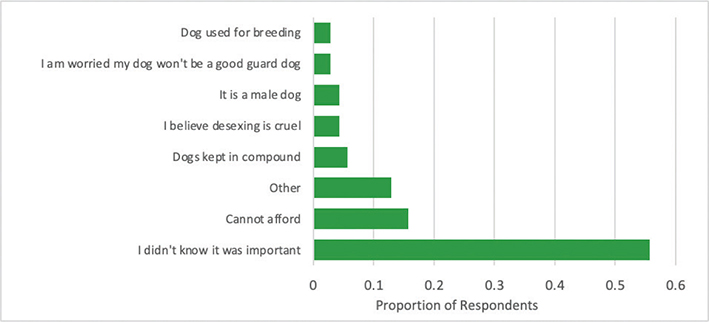
Fig. 2. Proportion of dog-owning households reporting reasons for not desexing their dogs (n = 70). ‘Other’ includes responses such as the animal being new or too young for desexing, lack of time or the fact that the owners are not always home, and unspecified responses.
Dog survival and reproduction
Nearly one-quarter of DOHs (22%; 18/82) reported at least one of their dogs had died or left the household in the past 12 months, with 24 dogs identified across the 14 responding households. Of these, 50% reportedly died of illness or injury, 17% died from unknown causes, 13% were given away, 8% left the household, and the remainder were either sold, died in an accident or killed by the owner or another person. A similar proportion of DOHs (24%; 19/80) reported that at least one of their dogs had given birth in the past year, with a total of 28 female dogs identified as having given birth, and 103 puppies born. Of the 18 households reporting the outcomes of these puppies, 50% gave the puppies away, 28% reported the puppies died of injury or illness after birth, and 11% reported the puppies died of unknown causes. The remainder reported that the puppies were either poisoned, eaten by the mother or had just recently been born.
Dog ownership practices
Husbandry
Compliance with standard guidelines for basic preventative care,43–45 including vaccination, deworming, and parasite control, was low, with 76% (62/82) of DOHs reporting that they had never vaccinated their dogs and 73% reporting that they had never given deworming or flea and tick treatments. More than half of DOHs left their dogs unconfined for at least part of the day (52%), with 48% keeping their dogs confined ‘All day and night’, and 6% of owners indicating their dogs were ‘Never’ confined. Dogs were fed once (21%); or twice daily (79%), with many DOHs feeding their dogs leftover human food (57%). Only one household fed dog biscuits, and two fed canned dog food. Over half of all DOHs (55%) selected ‘Other’ for diet and described a homemade or cooked diet. Where reported (n = 41), these homemade diets commonly consisted of meat, including chicken feet, chicken, tin fish, tuna, lamb or meat dust, alone (41%) or in combination with carbohydrates (39%) such as rice, bread, roti or crackers. Some homemade diets also included vegetables or legumes such as cassava and dhal (17%). Most DOHs reported providing fresh water once (16%) or twice (74%) daily, although 10% reported never giving fresh water to their dogs. A summary of dog ownership and husbandry practices can be found in Table 4.
Licensing
Only 5% (4/82) of DOHs reported all the dogs in their household were licensed in accordance with the Dogs Act46 and associated regulations.47 Among the 78 non-compliant DOH, half (50%) were unaware of the importance of licensing, and 17% did not know why the dogs were unlicensed (Fig. 3). One respondent mentioned access as a barrier to licensing, indicating that licenses were unavailable when they attempted to register their dogs.
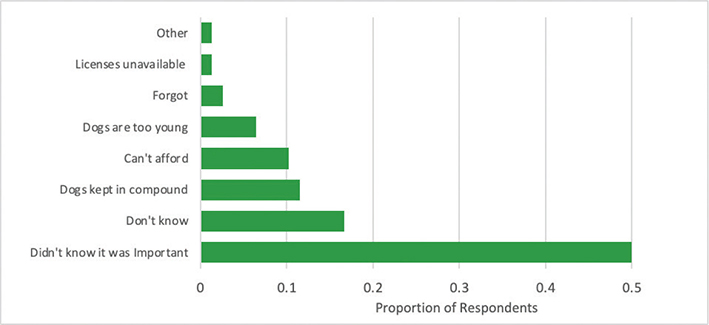
Fig. 3. Proportion of dog-owning households reporting reasons for not licensing their dogs (n = 78).
Community knowledge and practices
Across the 219 respondents, overall agreement with knowledge questions was high, particularly for statements ‘dogs can feel pain’ (99%), ‘vaccination is important for keeping dogs healthy’ (99%), and ‘[dog] owners are legally responsible for making sure their dog(s) are licensed’ (98%). Slightly lower agreement (80%) occurred for the statement ‘dogs carry diseases that can make people sick’. The mean total knowledge score across participants was 3.8 out of 4 (SD = 0.5), indicating that, on average, respondents answered 94% of knowledge items correctly. Despite anecdotal reports of dog meat consumption in the country, all respondents disagreed or strongly disagreed with the statement ‘I eat dog meat’.
Attitudes toward dogs and their management
Values and general sentiment
Responses to survey questions evaluating community perspectives on dogs and their management are presented in Fig. 4. For the general attitudes toward dogs domain (items 1–10), respondents demonstrated generally positive attitudes toward dogs, with a mean domain KAP score of 35.1 (range 22–47; SD = 5.48) out of a possible 50, with good internal consistency (Cronbach’s α = 0.84). Most respondents reported liking dogs (73%) and over half (58%) indicated dog welfare was important to them. Interestingly, while a higher proportion of DOHs (95%; 78/82) and caregiver households (81%; 96/118) reported liking dogs compared to the overall sample, this was not unanimous, suggesting some respondents own or care for dogs despite not liking them. Non-dog-owning caregivers were more likely to disagree or strongly disagree with the statement ‘I like dogs’ (OR = 8.11; 95% CI [1.63, 54.05]; p = 0.001), although a wide confidence interval suggests uncertainty due to small cell counts.
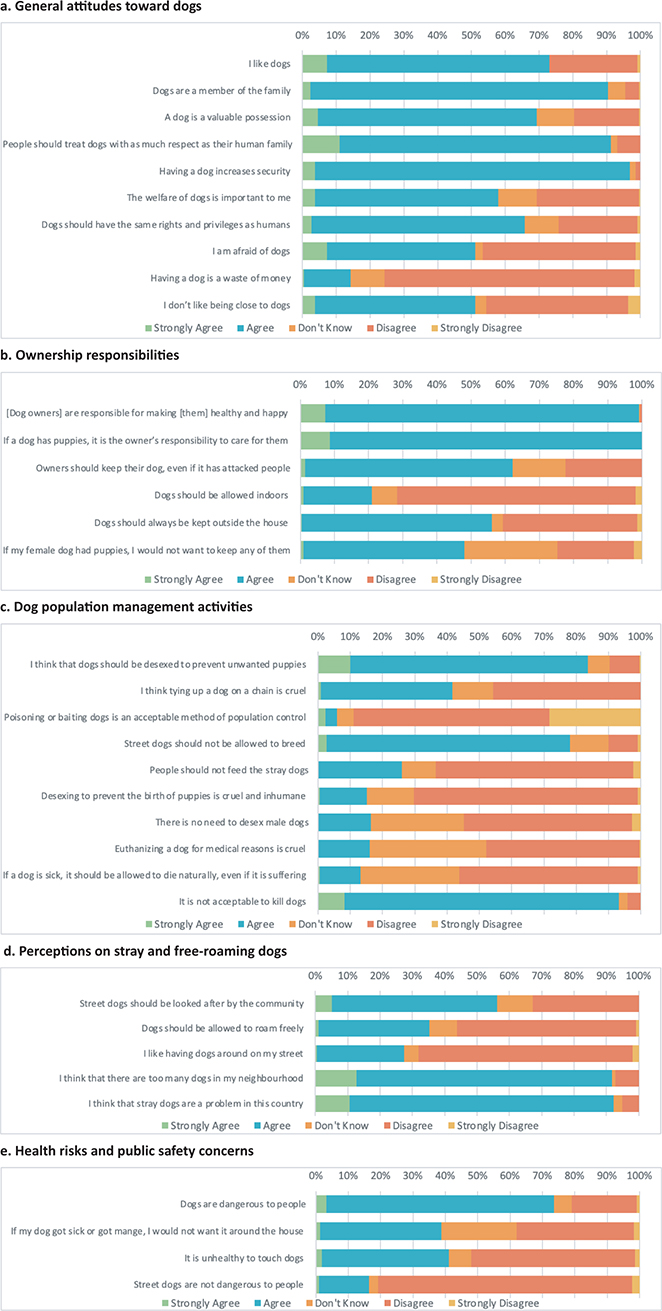
Fig. 4. Distribution of responses to attitude statements measured on a five-point Likert scale (n = 219). Some statements here have been abbreviated for clarity and spacing. Full statements can be found in Table 2.
The majority of respondents regarded dogs as members of the family (90%) and agreed they should be treated with the same respect as humans (91%), while a lower proportion (66%) believed dogs should have equal rights and privileges to humans. Responses also indicated a perceived value in dog ownership, with most households agreeing that dogs were a valuable possession (69%) and enhanced household security (97%), while disagreeing with the view that dogs were a waste of money (76%). Overall, the statements ‘people should treat dogs with as much respect as their human family’ (mean KAP score = 4.0; SD = 0.6) and ‘having a dog increases security’ (mean KAP score = 4.0; SD = 0.3) showed the greatest levels of agreement.
Public health risks and safety concerns
Despite the high proportion of households reporting liking dogs, over half of households (51%; 112/219) agreed they were afraid of dogs or disliked being close to them. Households in which a respondent reported a previous dog bite were more likely to agree or strongly agree with the statement ‘I am afraid of dogs’ (OR = 3.59; 95% CI [0.85,15.62]), although the association was not statistically significant (p = 0.053). A smaller proportion of households (41%) felt it was unhealthy to touch dogs, and 39% would not want a sick or mangy dog around the household. Most respondents (74%) perceived dogs as dangerous to people, with an even higher proportion (81%) viewing street dogs as dangerous. Mean item KAP scores for statements concerning the overall dangers of dogs to people (Items 32 and 35; mean KAP score = 3.5–3.7; SD = 0.8–0.9), where slightly higher than for statements relating to health or hygiene (items 33–34; mean KAP score = 2.9–3.0; SD = 0.9–1.0), suggesting the respondents perceived general danger from dogs to people as slightly greater than health and hygiene related concerns.
Ownership responsibilities and DPM
The vast majority of respondents recognized the core responsibilities of dog ownership, with 99% agreeing owners are responsible for keeping their dog healthy and happy. All respondents agreed that owners are responsible for puppies born to their female dogs, although nearly half of households (48%) indicated that if their female dog gave birth, they would not want to keep the puppies. In contrast, most owners (62%) agreed dog owners should keep their dogs even if they had attacked someone.
Most respondents viewed FRDs as a problem, with 92% identifying stray dogs as a national issue, and 92% reporting too many dogs in their neighborhood. Furthermore, 68% indicated that they did not like having dogs on their streets. Perceptions of public responsibility for FRDs were less definitive, with 56% agreeing street dogs should be looked after by the community, while 26% agreed that people should not feed stray dogs.
Levels of agreement for specific ownership practices and DPM activities were more variable. Just over half of respondents (56%) disagreed with allowing dogs to roam freely. Statements assessing various aspects of dog confinement had mean item KAP scores of 2.5–3.0 out of 5 (SD = 0.9–1.0) for items related to tethering and allowing dogs indoors (items 14, 15, and 28), indicating modest agreement across these behaviors. Respondents who agreed with the statement ‘dogs should not roam freely’ were more likely to agree with the statement ‘dogs should be allowed indoors’ (OR = 9.33; 95% CI [3.95, 22.66]; p < 0.0001). While this finding is statistically significant, the wide confidence interval reflects variability in responses.
Lethal methods of population control showed lower levels of agreement with mean item KAP scores of 1.9–2.0 out of 5 (SD = 0.5–0.8) for the two statements around killing, poisoning or bating dogs (item 19 and 26). Mean item KAP scores for the two statements around euthanasia (items 24–25) were slightly higher (3.3–3.4 of out 5; SD = 0.7), with only 13% of respondents agreeing with the statement ‘sick dogs should be allowed to die naturally, even if it is suffering’. However, attitudes toward euthanasia also showed a greater degree of uncertainty, with 36% of households responding ‘Don’t know’ to the statement ‘euthanising an animal for medical reasons is cruel’ and 31% responding ‘Don’t know’ to the statement ‘if a dog is sick, it should be allowed to die naturally even if it is suffering’. In addition, respondents who thought euthanasia for medical reasons was cruel were significantly more likely to believe a sick dog should be allowed to die naturally (OR = 3.75; 95% CI [1.18, 12.44]; p = 0.016), suggesting an association between ethical concerns around euthanasia and support for allowing natural death in sick animals.
In contrast, there was greater agreement with reproductive control. Most respondents agreed street dogs should not be allowed to breed (78%), and mean item KAP scores for statements around desexing (items 17 and 22) ranged from 3.6 to 3.8 out of 5 (SD = 0.7–0.8), with slightly lower agreement with the statement specifically on desexing male dogs (mean item KAP = 3.4 out of 5; SD = 0.8). Notably, more than a quarter (29%) responded ‘Don’t know’.
Cat ownership
Across responding households, 17% (36/214) reported owning a cat, with a total of 71 owned cats reported. There was an average of 2.15 cats per cat-owning household (SD 1.89) and 0.34 cats per household surveyed (SD = 1.08). Assuming these data are representative across the ward, this would equate to approximately 1,007 cats across the 2,591 households in Tavakubu.32 Where sex was reported (n = 45), the male-to-female ratio was 0.96:1.
Discussion
Effective DPM requires a clear understanding of local dog demographics, as well as public perceptions and ownership practices contributing to the establishment and maintenance of FRD populations. Successful DPM programs rely not only on service availability but also on community engagement and the capacity for dog owners to adopt recommended responsible dog ownership practices. Baseline data on community knowledge, attitudes, and barriers to responsible dog ownership practices and management strategies are therefore essential for designing targeted interventions tailored to local needs. To the authors’ knowledge, this is the first study of dog demographics and the KAPs of dog owners in the Fiji Islands. This study identifies ownership practices that may contribute to the establishment and maintenance of the FRD population and highlights an observable value-action gap between knowledge and attitudes toward responsible dog ownership and the translation of these behaviors into everyday practice. Contrary to perceptions of FRDs as being largely unowned, stray, or even ‘wild’, findings from this study suggest caregiver behaviors, such as community dog feeding, and owned dogs permitted to roam freely both contribute to the composition of FRD populations in Tavakubu.
DOHs comprised just over a third of households in our study (37%), which is slightly lower than reported in several high-income countries,48–51 yet DOHs in Tavakubu owned a comparatively higher average number of dogs. Beyond conventional dog ownership, the findings of this study suggest a strong tendency toward caregiver behavior, evidenced by the high proportion (53%) of households reporting feeding dogs they do not own. This is substantially higher than the 37% of households reported in a similar study in India.52 While community feeding may be perceived as an expression of care or compassion toward animals, our study found that nearly one-quarter of households that reported feeding dogs they did not own expressed disagreement with the statement ‘I like dogs’. This suggests that caregiver behaviors may be motivated by factors other than empathy or compassion, such as a sense of social responsibility or perceived obligation.
Whatever the motivation, community feeding behaviors can have a strong influence on dog ecology and management outcomes. A study by de Melo et al.53 in Brazil demonstrated that even small groups of community feeders can strongly influence the spatial distribution of FRDs, creating high-density ‘hotspots’ in certain areas that can complicate management efforts. Feeding unowned dogs may also enhance their survival and reproductive success,54,55 suggesting this subpopulation may help sustain the FRD population, especially when desexing rates in this subgroup are low. Given the high levels of community feeding in Tavakubu, this subgroup of the FRD population represents a key target for DPM interventions. While community-fed dogs may be controlled through management strategies involving indiscriminate culling and baiting, they are less likely to benefit from current outreach desexing models, which primarily focus on owned dogs. For this reason, developing strategies for reproductive control within this subpopulation should be considered a priority in the area. Further research is needed to better understand the underlying motivations for caregiver behaviors and to inform the design of effective, contextually appropriate interventions.
Dog bite incidence among respondent households, particularly from stray and unfamiliar dogs, exceeded that reported in a UK study56 and may have contributed to the fear of dogs reported by over half of survey respondents. Agreement with attitude statements around the dangers of dogs highlight concerns about the potential negative effects of dogs on public health and well-being and may reinforce perceptions that there are ‘too many dogs’ at both local and national levels. Recognition of dog overpopulation as an issue suggests a high likelihood of public support for DPM initiatives to control the FRD populations, provided the program aligns with community values and priorities. In contrast, knowledge of zoonotic disease risks was comparatively low. This highlights the need for further research to quantify these risks, and inform targeted awareness programs, to strengthen community engagement in DPM activities. The finding that non-medical management of dog bites using treatments such as kerosene was more common than medical management underscores the need for targeted education on proper first aid and management of dog bites and clear guidance on when medical attention is required.
In Fiji, animal welfare efforts have traditionally focused on the adoption and rehoming of stray and unwanted animals. However, despite Tavakubu Ward’s proximity to the headquarters of one of Fiji’s largest animal shelters, only a few respondents reported acquiring their dogs through adoption, and none of the respondents reported surrendering dogs to a local shelter, suggesting uptake of these services is low. Instead, most dogs were acquired as gifts/free animals or directly from the street. At the same time, while historical responses from government authorities have centered around lethal methods of population control (including culling and baiting), our survey results show a limited level of agreement with such methods, with slightly more mixed responses toward humane euthanasia. This may reflect cultural or religious attitudes, as both Hinduism and Christianity have been described as viewing euthanasia and assisted suicide as ethically problematic within broader religious commitments.57 In Hinduism in particular, principles around non-violence, reincarnation, and the sanctity of life may influence perspectives around euthanasia, though interpretations may differ in cases of severe suffering or terminal illness, demonstrating the complexity of these beliefs.58 These findings underscore the need to understand religious influences on community responses to DPM activities and prioritize interventions that are more likely to gain community acceptance and participation. This is particularly important, given concerns about the effectiveness of lethal methods of population control in achieving sustainable changes in dog populations.3,23,59–61
Despite low desexing rates in the owned dog population, there appears to be a relatively high level of community agreement for reproductive control as a DPM strategy. However, limited awareness of the importance of desexing was identified as the primary barrier to desexing, underscoring the need for community education and awareness on the importance of reproductive control within DPM programs. The influence of religious and cultural beliefs on desexing was not evaluated in the current study given the low sample size and diversity of religious beliefs reported, and may represent additional barriers, along with other undocumented personal or household reservations not captured in the survey. Further research, designed to ensure ethical and culturally appropriate examination of religious and other socioeconomic factors on DPM programs is needed to better understand how these factors may influence community attitudes toward dog ownership practices and DPM strategies in Fiji to ensure the development of culturally and contextually relevant DPM interventions.
Just over half of the respondents disagreed with the idea that dogs should be allowed to roam freely. However, the level of agreement for tethering or confining dogs indoors was more variable. This poses challenges in Fiji, where perimeter fencing around properties is uncommon, thereby limiting alternative strategies to prevent roaming. Many DOHs reportedly allowed their dogs to roam for at least a portion of the day, indicating owned dogs likely contribute to the FRD populations observed in Tavakubu. Addressing barriers to confinement should therefore be a focus for future research and community consultation. A large proportion of intact dogs and a reliance on homemade diets, which are commonly associated with nutritional deficiencies62–64 that may influence scavenging behavior and may, in turn, increase the likelihood of roaming among unconfined dogs, potentially contributing to the FRD population.
Although most respondents acknowledged the importance of vaccination in supporting dog health, most of the DOHs had never vaccinated their dogs, with similar patterns observed for both internal and external parasite prevention. Further research is needed to better understand real and perceived barriers to preventative care treatments in owned dogs, to help mitigate the risks of infectious diseases to animal welfare and public health. Furthermore, in Fiji annual dog licensing is a legal requirement for all dogs over the age of 6 months under the Dogs Act46 and associated regulations,47 with the current fee for licensing being Fijian Dollar (FJD) 13.50 (approximately United States Dollar (USD) 6). Although knowledge scores regarding licensing requirements were high, compliance with this requirement in DOHs remained low, with a limited understanding of the importance of licensing identified as the primary reason for non-compliance. Targeted awareness campaigns promoting the benefits and importance of dog licensing and clarifying legal requirements of dog owners may help to facilitate translation of knowledge into improved compliance with this requirement in DOHs.
This comprehensive analysis of survey results demonstrates a clear value-action gap, where public knowledge and positive attitudes toward key aspects of responsible pet ownership, including sterilization, preventive care, dog licensing and confinement, are not consistently translated into everyday practice. This gap may reflect competing priorities, inadequate resources or capacity, entrenched habits, or apathy toward responsible dog ownership behaviors, which may reduce the likelihood of community uptake. Further research is needed to better understand the root causes of this discrepancy and to develop practical strategies to encourage actionable change, recognizing that the success of DPM programs is often reliant on the support and involvement of community members.
Strengths and limitations
The current study offers valuable insights into ownership practices and community perspectives regarding dogs and their management in Tavakubu, Fiji, and identifies management strategies that are likely to align with community values and perceptions. Ownership statistics help to determine the magnitude of intervention required for program planning and evaluation. The survey also identifies gaps in current knowledge and practice, defining potential targets for future interventions. The inclusion of cat ownership statistics in the survey instrument is also important, as anecdotal evidence suggests that reductions in local dog populations from natural attrition or DPM activities may coincide with increases in free-roaming cat populations. This observation highlights potential cross-species dynamics that could influence the outcomes of companion animal population management interventions. This study also establishes an important baseline for future monitoring of DPM efforts and offers a framework for similar work in other parts of Fiji and the broader Pacific region. Although this manuscript does not directly examine the ecology and demographics of the FRD population in Tavakubu, street dog surveys conducted as part of the wider baseline data collection (unpublished data) contribute to a more comprehensive understanding of dog populations across the ward.
KAP surveys, while informative, have inherent limitations. While they capture reported beliefs and perceptions, they do not provide a direct measure of support for intervention strategies. Formal evaluation of community support for management interventions, alongside expert assessments of intervention efficacy to develop a behavioral prioritization matrix, as used by Please et al.65 in Australia, could help to generate more actionable insights for intervention planning. Household surveys also carry the potential for sampling bias. This was mitigated using a systematic sampling approach, which provides more even coverage than convenience sampling and limits the potential for sampling bias. Nonetheless, response biases may still influence the accuracy of the KAP reported in this manuscript. As with all KAP studies, this study carries the potential for self-reporting and social desirability biases, which were mitigated to the extent possible through the use of anonymous responses, and the training of surveyors to support standardized survey delivery. Regardless, the authors acknowledge the results from door-to-door surveys may still be influenced by social desirability bias.
As this is a cross-sectional study, survey responses reflect community perceptions at the time the survey was undertaken, which limits the potential to establish causal relationships between variables. Repeating the survey over time may help monitor community-level changes in knowledge, attitudes and practices in response to changes in DPM activities. An additional limitation arose from the high level of caregiver behavior reported in Tavakubu. As this was unexpected, the desexing status of these animals and their potential to contribute to the maintenance of the FRD populations in Tavakubu were not clearly evaluated. The motivations underlying caregiver behavior remain poorly understood and represent an important area for future research.
A systematic door-to-door sampling strategy was used to improve representativeness and support the generalizability of results within the target community. However, external validity may be limited by non-response bias and restriction of the study to a single community may limit broader generalization of results beyond Tabakubu. While the sample size calculation assumed a conservative proportion of 0.5, which is higher than the observed proportion of 0.37 for DOHs, this ensured the sample size was sufficient to provide precision and reliability regardless of the observed proportion.36 Despite these limitations, the questionnaire demonstrated good internal consistency for the general attitudes toward dogs domain, supporting the reliability of the measured construct. However, as a community-based KAP survey, the survey instrument was adapted to the local context, and formal external validation was not feasible. This may limit comparability of the results with other settings. Due to the small sample size, analyses were limited to descriptive statistics and odds ratios, as further stratification of variables to allow for correlational and subgroup analysis was not feasible. Despite these limitations, the study provides direction for further research aimed at directly evaluating the motivations, barriers, and contributing factors underlying the findings of this study.
Conclusion
The findings of this study suggest that historical methods of dog population control in Fiji, such as rehoming and indiscriminate culling and baiting of FRDs, may not align with contemporary community values. While outreach desexing programs appear more consistent with local attitudes, their effectiveness will depend on strategies also addressing the unowned dogs sustained through community feeding, which may play an important role in maintaining FRD populations. Inconsistent confinement, low desexing rates, and feeding practices relying on homemade diets, which are often nutritionally deficient, may increase the likelihood of roaming in owned dogs, contributing to the FRD population.
A value-action gap between knowledge and agreement with DPM activities and translation into everyday responsible dog ownership practices, limited public understanding of the importance of registration and desexing, and financial barriers may further undermine the effectiveness of DPM efforts. Continued monitoring and evaluation of community knowledge, attitudes and practices, together with program outputs, is critical for understanding how different intervention strategies influence the size and demographics of the local dog population and the associated impacts on public health and animal welfare over time. Improved collaboration between government authorities and not-for-profit organizations, allocated funding to support DPM strategies demonstrating higher levels of public support, and further research to understand barriers to the uptake of these services may help improve the effectiveness of dog management initiatives in Tavabuku.
Authors’ contributions
All authors contributed to the interpretation of results and manuscript development. JH, CQ and JD contributed to the conceptualization and visualization of the study. Methods were adapted from those previously used for administrative purposes in Fiji and Papua New Guinea by JH. CQ had primary responsibility for the investigation, project administration, and resources. JH was responsible for supervision, formal analysis, methodology, data curation, and drafting the original manuscript.
Acknowledgments
The authors acknowledge Shaneel Narayan (SPCA Fiji Islands) for assistance with survey development and the application for Human Research Ethics approval, Niaomi Kinivuwai Nacagilevu and Rohini Pratap (Animals Fiji) for their assistance with door-to-door surveys, and the Fiji Ministry of Agriculture for its support of this study. We also thank Sofia Weerts (Animals Fiji) for her valuable contribution in reviewing the manuscript.
Authors’ notes
Portions of this work have been previously presented at the International Coalition on Animal Management (ICAM) 2024 Virtual Conference and as part of an online webinar for the Getting to Zero (G2Z) initiative.
References
| 1. | Anderson A. The rat and the octopus: initial human colonization and the prehistoric introduction of domestic animals to Remote Oceania. Biol Invasions. 2009;11:1503–1519. doi: 10.1007/s10530-008-9403-2 |
| 2. | Borrelli C, Granai G, Di Iacovo FP, et al. The benefits of dog ownership on people as an undervalued resource in urban environments. Dog Behav. 2022;8(3):163. |
| 3. | Smith LM, Quinnell RJ, Goold C, Munteanu AM, Hartmann S, Collins LM. Assessing the impact of free-roaming dog population management through systems modelling. Sci Rep. 2022;12(1):11452. doi: 10.1038/s41598-022-15049-1 |
| 4. | Repeka N. Dog attacks on tourists and locals a concern. The Fiji Times. 2016. https://www.fijitimes.com.fj/dog-attacks-on-tourists-and-locals-a-concern/. Accessed November 13, 2024. |
| 5. | Graue C. Fiji Authorities Crack Down on Stray Dog Problem after Attack. Pacific Beat. Australian Broadcasting Corporation (ABC) Pacific; 2019. https://www.abc.net.au/pacific/programs/pacificbeat/fiji-authorities-to-crack-down-on-stray-dog-problem-after-attack/11219230. Accessed November 16, 2024. |
| 6. | Epineri V. Wild dogs bite off girl’s ear. Fiji Sun. 2019. https://www.pressreader.com/fiji/fiji-sun/20190615/282269551912353. Accessed November 16, 2024. |
| 7. | Nacei, L. Dog attacks boy, 7, at sea wall. The Fiji Times. 2020. https://www.fijitimes.com.fj/dog-attacks-boy-7-at-sea-wall/. Accessed November 16, 2024. |
| 8. | Silaitoga S. Dog attacks girl, 7. The Fiji Times. 2021. https://www.fijitimes.com.fj/dog-attacks-girl-7/. Accessed November 16, 2024. |
| 9. | Silaitoga S. Dog attacks cause loss of livestock. The Fiji Times. 2020. https://www.pressreader.com/fiji/the-fiji-times/20201030/281981790092069. Accessed November 16, 2024. |
| 10. | Reddy N. Farmer pleads for help as wild dogs kill goats. The Fiji Times. 2023. https://www.fijitimes.com.fj/farmer-pleads-for-help-as-wild-dogs-kill-goats/. Accessed November 16, 2024. |
| 11. | Tuilevuka N. Farmers lose livestock to wild dogs. The Fiji Times. 2024. https://www.fijitimes.com.fj/farmers-lose-livestock-to-wild-dogs/. Accessed November 16, 2024. |
| 12. | Ministry of Primary Industries. Department of Agriculture Annual Report 2009. 2009:148 pp. https://www.agriculture.gov.fj/documents/annualreport/AR2009.pdf. Accessed November 17, 2024. |
| 13. | Ministry of Primary Industries. Department of Agriculture Annual Report 2011. 2011:66 pp. https://www.agriculture.gov.fj/documents/annualreport/AR2011.pdf. Accessed November 17, 2024. |
| 14. | Ministry of Agriculture. Ministry of Agriculture Annual Report 2012. 2012:82 pp. https://www.agriculture.gov.fj/documents/annualreport/AR2012.pdf. Accessed November 17, 2024. |
| 15. | Ministry of Primary Industries. Department of Agriculture Annual Report 2008. 2008:118 pp. https://www.agriculture.gov.fj/documents/annualreport/AR2008.pdf. Accessed November 16, 2024. |
| 16. | Ministry of Agriculture. Ministry of Agriculture Annual Report 2013. 2013:69 pp. https://www.agriculture.gov.fj/documents/annualreport/AR2013.pdf. Accessed November 17, 2024. |
| 17. | Ministry of Agriculture. Ministry of Agriculture Annual Report 2015. 2015:72 pp. https://www.agriculture.gov.fj/documents/annualreport/AR2015.pdf. Accessed November 17, 2024. |
| 18. | Ministry of Agriculture. Ministry of Agriculture Annual Report 2014. 2014:64 pp. https://www.agriculture.gov.fj/documents/annualreport/AR2014.pdf. Accessed November 15, 2024. |
| 19. | Australian Veterinary Association. Surgical Sterilisation of Dogs and Cats. 2022. https://www.ava.com.au/policy-advocacy/policies/companion-animals-health/desexing-surgical-sterilisation-of-companion-animals/. Accessed October 1, 2025. |
| 20. | Moreira ED, Jr, de Souza VMM, Sreenivasan M, Nascimento EG, de Carvalho LP. Assessment of an optimized dog-culling program in the dynamics of canine Leishmania transmission. Vet Parasitol. 2004;122(4):245–252. doi: 10.1016/j.vetpar.2004.05.019 |
| 21. | Nunes CM, de Lima VMF, de Paula HB, et al. Dog culling and replacement in an area endemic for visceral leishmaniasis in Brazil. Vet Parasitol. 2008;153(1–2):19–23. doi: 10.1016/j.vetpar.2008.01.005 |
| 22. | Taylor LH, Wallace RM, Balaram D, et al. The role of dog population management in rabies elimination – a review of current approaches and future opportunities. Front Vet Sci. 2017;4:109. doi: 10.3389/fvets.2017.00109 |
| 23. | Yoak A, Calinger K, Hiby E. Assessing multiple free-roaming dog control strategies in a flexible agent-based model. Sci Rep. 2023;13(1):19826. doi: 10.1038/s41598-023-47076-x |
| 24. | Belo VS, Struchiner CJ, Werneck GL, et al. Abundance, survival, recruitment and effectiveness of sterilization of free-roaming dogs: a capture and recapture study in Brazil. PLoS One. 2017;12(11):e0187233. doi: 10.1371/journal.pone.0187233 |
| 25. | Hiby E, Rungpatana T, Izydorczyk A, Rooney C, Harfoot M, Christley R. Impact assessment of free-roaming dog population management by CNVR in Greater Bangkok. Animals. 2023;13(11): 1726. doi: 10.3390/ani13111726 |
| 26. | Wandeler AI, Matter HC, Kappeler A, Budde A. The ecology of dogs and canine rabies: a selective review. Rev Sci Tech Int Off Epizoot. 1993;12(1):51–71. doi: 10.20506/rst.12.1.663 |
| 27. | Fournier AK, Geller ES. Behavior analysis of companion-animal overpopulation: a conceptualization of the problem and suggestions for intervention. Behav Soc Issues. 2004;13(1):51–69. doi: 10.5210/bsi.v13i1.35 |
| 28. | Morters MK, McKinley TJ, Restif O, et al. The demography of free-roaming dog populations and applications to disease and population control. J Appl Ecol. 2014;51(4):1096–1106. doi: 10.1111/1365-2664.12279 |
| 29. | Pacific Community (SPC), Fiji Bureau of Statistics. Enumeration Areas – Fiji 2017 Population and Housing Census. 2017. https://pacificdata.org/data/dataset/2017_fji_phc_admin_boundaries. Accessed November 5, 2022. |
| 30. | Schedule Lautoka Wards. 56,495. 2011. https://laws.gov.fj/Acts/ViewSection/127926. Accessed March 7, 2024. |
| 31. | OpenStreetMap Contributors. OpenStreetMap – Fiji Region Dataset. 2020. https://download.geofabrik.de/australia-oceania/fiji-latest-free.shp.zip. Accessed November 9, 2020. |
| 32. | Fiji Bureau of Statistics. Household & Population Summary – Lautoka City by Ward. Fiji Bureau of Statistics, Suva, Fiji, 2017. |
| 33. | International Companion Animal Management Coalition. Humane Dog Population Management Guidance. 2019. https://www.icam-coalition.org/wp-content/uploads/2019/09/2019-ICAM-DPM-guidance-Interactive-updated-15-Oct-2019.pdf. Accessed November 10, 2021. |
| 34. | Dhillon JM. Dog Population Management and Dog Bite Prevention in Rural and Remote Northern Saskatchewan Aboriginal Communities. Doctor of Philosophy. University of Saskatchewan; 2017. https://harvest.usask.ca/items/e5a51917-e498-4ce8-8eae-abfa14a4e75a. Accessed November 10, 2021. |
| 35. | World Organisation for Animal Health. Terrestrial Animal Health Code. 2024. https://www.woah.org/fileadmin/Home/eng/Health_standards/tahc/2024/en_preface.htm. Accessed February 16, 2026. |
| 36. | Stevenson MA. Sample size estimation in veterinary epidemiologic research. Front Vet Sci. 2021;7:539573. doi: 10.3389/fvets.2020.539573 |
| 37. | Cronbach LJ. Coefficient alpha and the internal structure of tests. Psychometrika. 1951;16(3):297–334. doi: 10.1007/BF02310555 |
| 38. | Tavakol M, Dennick R. Making sense of Cronbach’s alpha. Int J Med Educ. 2011;2:53. doi: 10.5116/ijme.4dfb.8dfd |
| 39. | Fiji Bureau of Statistics. 2017 Fiji Population & Housing Census – Release 3. 2017:89–90. https://www.statsfiji.gov.fj/census-surveys/census-of-population-and-housing/#2017. Accessed May 22, 2025. |
| 40. | Fiji Bureau of Statstics. Fiji Bureau of Statistics Population 2017 Census – Population by Major Religion. 2017. https://experience.arcgis.com/experience/fd6bb849099f46869125089fd13579ec/page/Population--by-Major-Religious-Groups. Accessed March 9, 2026. |
| 41. | Basco AN, McCormack ER, Basco WT, Jr. Age-and sex-related differences in nonfatal dog bite injuries among persons aged 0–19 treated in hospital emergency departments, United States, 2001–2017. Public Health Rep. 2020;135(2):238–244. doi: 10.1177/0033354920904072 |
| 42. | Patterson KN, Horvath KZ, Minneci PC, et al. Pediatric dog bite injuries in the USA: a systematic review. World J Pediatr Surg. 2022;5(2):e000281. doi: 10.1136/wjps-2021-000281 |
| 43. | Companion Animal Parasite Council. General Guidelines for Dogs and Cats. 2025. https://capcvet.org/guidelines/general-guidelines/. Accessed June 25, 2025. |
| 44. | Dantas-Torres F, Ketzis J, Mihalca AD, et al. TroCCAP recommendations for the diagnosis, prevention and treatment of parasitic infections in dogs and cats in the tropics. Vet Parasitol. 2020;283:109167. doi: 10.1016/j.vetpar.2020.109167 |
| 45. | Squires RA, Crawford C, Marcondes M, Whitley N. 2024 guidelines for the vaccination of dogs and cats – compiled by the Vaccination Guidelines Group (VGG) of the World Small Animal Veterinary Association (WSAVA). J Small Anim Pract. 2024;65(5):277–316. doi: 10.1111/jsap.13718 |
| 46. | Laws of Fiji. Dogs Act. 1968. https://www.laws.gov.fj/Acts/DisplayAct/678. Accessed September 27, 2025. |
| 47. | Laws of Fiji. Dogs Regulations. 1969. https://www.laws.gov.fj/Acts/DisplayAct/678. Accessed September 27, 2025. |
| 48. | Animal Medicines Australia. Pets in Australia: a national survey of pets and people. Animal Medicines Australia, Barton, ACT, 2025. https://animalmedicinesaustralia.org.au/wp-content/uploads/2025/09/SNR-2403006-Pet-Ownership-Study-2025-Designed_F3.pdf. Accessed October 02, 2025. |
| 49. | Applebaum JW, Peek CW, Zsembik BA. Examining US pet ownership using the General Social Survey. Soc Sci J. 2023;60(1):110–119. doi: 10.1080/03623319.2020.1728507 |
| 50. | American Veterinary Medical Association. 2022 AVMA Pet Ownership and Demographics Sourcebook. 2022. https://ebusiness.avma.org/files/ProductDownloads/eco-pet-demographic-report-22-low-res.pdf?utm_source=chatgpt.com. Accessed October 2, 2025. |
| 51. | Carvelli A, Scaramozzino P, Iacoponi F, Condoleo R, Della Marta U. Size, demography, ownership profiles, and identification rate of the owned dog population in central Italy. PLoS One. 2020;15(10):e0240551. doi: 10.1371/journal.pone.0240551 |
| 52. | Corfmat J, Gibson AD, Mellanby RJ, et al. Community attitudes and perceptions towards free-roaming dogs in Goa, India. J Appl Anim Welf Sci. 2023;26(4):565–581. doi: 10.1080/10888705.2021.2014839 |
| 53. | de Melo SN, Da Silva ES, Ribeiro RAN, et al. The influence of community feeders and commercial food outlets on the spatial distribution of free-roaming dogs – a photographic capture and recapture study. Animals. 2023;13(5):824. doi: 10.3390/ani13050824 |
| 54. | Bhalla SJ, Kemmers R, Vasques A, Vanak AT. ‘Stray appetites’: a socio-ecological analysis of free-ranging dogs living alongside human communities in Bangalore, India. Urban Ecosyst. 2021;24(6):1245–1258. doi: 10.1007/s11252-021-01097-4 |
| 55. | Silva-Rodríguez EA, Cortés EI, Zambrano B, Naughton-Treves L, Farías AA. On the causes and consequences of the free-roaming dog problem in southern Chile. Sci Total Environ. 2023;891:164324. doi: 10.1016/j.scitotenv.2023.164324 |
| 56. | Westgarth C, Brooke M, Christley RM. How many people have been bitten by dogs? A cross-sectional survey of prevalence, incidence and factors associated with dog bites in a UK community. J Epidemiol Community Health. 2018;72(4):331–336. doi: 10.1136/jech-2017-209330 |
| 57. | Grove G, Lovell M, Best M. Perspectives of major world religions regarding euthanasia and assisted suicide: a comparative analysis. J Relig Health. 2022;61(6):4758–4782. doi: 10.1007/s10943-022-01498-5 |
| 58. | Avci E. A comparative analysis on the perspective of Sunni theology and Hindu tradition regarding euthanasia: the impact of belief in resurrection and reincarnation. J Relig Health. 2019;58(5):1770–1791. doi: 10.1007/s10943-019-00836-4 |
| 59. | Amaku M, Dias RA, Ferreira F. Dynamics and control of stray dog populations. Math Popul Stud. 2010;17(2):69–78. doi: 10.1080/08898481003689452 |
| 60. | Spatola GJ, Feuerborn TR, Betz JA, et al. Genomic reconstruction reveals impact of population management strategies on modern Galápagos dogs. Curr Biol. 2025;35(1):208–216.e5. doi: 10.1016/j.cub.2024.10.079 |
| 61. | Smith LM, Hartmann S, Munteanu AM, Dalla Villa P, Quinnell RJ, Collins LM. The effectiveness of dog population management: a systematic review. Animals. 2019;9(12): 1020. doi: 10.3390/ani9121020 |
| 62. | Pedrinelli V, Zafalon RVA, Rodrigues RBA, et al. Influence of number of ingredients, use of supplement and vegetarian or vegan preparation on the composition of homemade diets for dogs and cats. BMC Vet Res. 2021;17(1):358. doi: 10.1186/s12917-021-03068-5 |
| 63. | Remillard RL. Homemade diets: attributes, pitfalls, and a call for action. Controv Small Anim Nutr. 2008;23(3):137–142. doi: 10.1053/j.tcam.2008.04.006 |
| 64. | Ionică CN, Daina S, Pop R, Macri A. Home-prepared dog food: benefits and downsides. Front Anim Sci. 2025;6:1506003. doi: 10.3389/fanim.2025.1506003 |
| 65. | Please PM, Hine DW, Skoien P, Phillips KL, Jamieson I. Prioritizing community behaviors to improve wild dog management in peri-urban areas. Hum Dimens Wildl. 2018;23(1):39–53. doi: 10.1080/10871209.2017.1385877 |
Footnote
a. ‘Desexing’ (surgical sterilization) is a general term used in Australia and many Pacific Island nations to refer to spaying or neutering in cats and dogs.19