ORIGINAL RESEARCH ARTICLE
Shelter to Home: Surveys of Early Post-Adoption Experiences with More Than 22,000 Dog and Cat Adopters
Margaret R. Slater1, Emily Weiss2, Julie K. Levy3 and Michael Greenberg4*
1College of Veterinary Medicine and Biomedical Sciences, Texas A&M University, College Station, TX, USA; 2EWC Inc, Valley Center, KS, USA; 3Shelter Medicine Program, College of Veterinary Medicine, University of Florida, Gainesville, FL, USA; 4Petszel, New Orleans, LA, USA
Abstract
Introduction: Understanding the early post-adoption experience is critical to supporting animal welfare, strengthening the human–animal bond, and improving shelter practices. While most adopters report high satisfaction, behavioural and care-related challenges are common. This study used the Petszel platform to evaluate early post-adoption outcomes across more than 22,000 dog and cat adopters from 112 shelters and rescue organisations in 40 United States (U.S.) states.
Methods: Surveys were distributed automatically on Day 1, Week 1, and Month 1 post-adoption. Adopters were asked about general satisfaction, specific behaviours, veterinary care, and microchip registration. Responses were included only if the pet was in the home at time of survey. Data were summarised by species and time point using descriptive statistics.
Results: Over 94% rated their experience positively (score of 4 or 5 out of 5) at all time points. However, more than 78% of dog adopters and 50% of cat adopters also reported at least one challenge. Among dogs, common issues included house soiling (32%), play biting (34%), leash pulling (28%), and separation distress/anxiety (24%). Among cats, the most frequent challenges were fear or hiding (19%), introduction to existing pets (10%), anxiety in specific situations (9%); destructive chewing/scratching (8%) and urinating and/or defecating outside the litter box (5%) were both reported slightly less commonly. By Month 1, 56% of cat adopters and 66% of dog adopters reported completing their pet’s first veterinary visit. Microchip registration was reported by 61% of cat and 62% of dog adopters by Week 1. Nearly half of dog adopters reported no plans for formal training by Month 1.
Conclusion: Despite high satisfaction ratings, many adopters faced behavioural or care challenges. These findings suggest that general satisfaction measures may obscure important challenges as animals settle into their new homes. Species-specific counselling, proactive veterinary engagement, and further microchip registration guidance may better support post-adoption success.
Keywords: pet adoption; cat behaviour; dog behaviour; animal shelter; human-animal bond; post-adoption; adoption satisfaction
Citation: Journal of Shelter Medicine and Community Animal Health 2026, 5: 158 - http://dx.doi.org/10.56771/jsmcah.v5.158
Copyright: © 2026 Margaret R. Slater et al. This is an Open Access article distributed under the terms of the Creative Commons Attribution 4.0 International License (http://creativecommons.org/licenses/by/4.0/), allowing third parties to copy and redistribute the material in any medium or format and to remix, transform, and build upon the material for any purpose, even commercially, provided the original work is properly cited and states its license.
Received: 12 September 2025; Revised: 27 November 2025; Accepted: 19 January 2026 Published: 20 February 2026
Competing interests and funding: MG is a co-founder and Chief Veterinary Officer of Petszel. JL and EW received advisory shares in Petszel. MS, who is not unaffiliated with Petszel, was contracted to lead study design, analysis, and manuscript preparation. All authors received honoraria from Petszel as part of this project.
Correspondence: *Michael Greenberg, Petszel, New Orleans, LA, USA. Email: mike@accesstovetcare.org
Reviewers: Missy Matusicky, Molly Sumridge
Supplementary material: Supplementary material for this article can be accessed here.
Adoption from animal shelters is one of the most common ways people in the United States (U.S.) acquire dogs and cats.1 Understanding the post-adoption experience is important for shelters, veterinarians, and potential adopters. Knowing what happens once a pet enters a new home can inform adoption processes, guide targeted follow-up support, improve animal welfare, help prospective owners anticipate common challenges, and reduce the chances of a pet being returned to the shelter.2–5
Challenges in the early post-adoption period are common. Previous studies have found that more than half of adopters report at least one behavioural or health concern within the first weeks after adoption. Some issues, such as house training issues in dogs and litter box issues in cats5–9 can persist for months. Even when such problems occur, most adopters still rate their overall experience positively, suggesting that general ‘satisfaction’ measures may underestimate the need for support. Systematic follow-up that probes for specific issues can help identify and address these challenges before they escalate.
This apparent disconnect between satisfaction and reported challenges has been documented repeatedly.5,7–12 Many commonly reported behaviours – destructive activity, inappropriate elimination, excessive vocalisation, and separation anxiety – can indicate stress and raise welfare concerns.2,13 Recognising that adopters may struggle with behavioural issues while still reporting high satisfaction underscores the need for targeted support that addresses these issues without diminishing the human–animal bond.
Establishing a relationship with a veterinarian is also critical to post-adoption welfare. In one study, more than 60% of adopters took their pet to a veterinarian within the first month, with health problems strongly associated with visits.8 Respiratory tract disease was the most common reason for the veterinary visit, and those that adopted a dog or a young animal were more likely to visit. However, some adopters may not establish a veterinary relationship early on missing the opportunity to provide continuity of preventive care, establish a health baseline, and detect underlying conditions. Strong shelter–veterinarian connections further ensure adopters receive accurate health information and timely support in addition to a smooth handoff of veterinary care.
Microchipping is an important tool for reunification, a core function of many shelters. One study found return-to-owner rates for dogs increased from 22% without a microchip to 52% with one, and for cats from 2 to 35%.14 Recent data from 17 municipal shelters show microchipped pets are more than three times as likely to be reunited with their families.15 Many shelters microchip pets prior to adoption. In some cases, the shelter software automatically registers the microchip to the adopter at the time of ownership transfer. In other shelters, microchip registration relies on the adopter to take the initiative to contact the microchip company to register the microchip. Microchips only work if owners keep contact information up to date – a step that often requires continued awareness and follow-through post-adoption.
The present study was conducted through Petszel, a commercially available post-adoption platform provided at no cost to participating animal welfare organisations and their adopters. Shelters use Petszel to deliver adopters pets’ shelter records, provide educational resources, transfer medical records to veterinary hospitals, and automate post-adoption follow-up. Shelters are informed through the platform’s terms and conditions that de-identified data may be used for research.
While previous studies have explored post-adoption health, behaviour, and adopter satisfaction, none have done so with very large and geographically diverse datasets. The Petszel platform provided access to data from more than 112 shelters across 40 states, capturing responses from a total of 22,571 adopters across multiple time points for a total of 39,974 survey responses. To our knowledge, no previous study has examined post-adoption outcomes for both dogs and cats at this scale, across such a wide range of shelters and geographies, while also assessing veterinary engagement, microchip registration, and – among dogs – training uptake.
The objectives of this study were to:
Quantify what was reported as going well for dog and cat adopters on Day 1, Week 1, and Month 1 post-adoption.
Quantify challenges reported over the same periods and compare them with what was going well.
Quantify post-adoption veterinary visits, microchip registration, and – among dogs – training uptake.
Identify opportunities for shelters and community veterinarians to improve support for adopters and pets based on these findings.
Methods
Petszel is a post-adoption support platform designed to help shelters provide adopters with their pets’ shelter records; age- and species-specific educational content on areas such as new pet introductions, behaviour issues, and veterinary care; and automated follow-up surveys. The platform connects with four different shelter software management systems (PetPoint, Chameleon, Shelterluv, and Shelter Buddy). The Petszel platform was launched in January 2024. All participating shelters were known to provide microchips to their adopted pets.
Shelter enrolment and adopter communication
Shelters utilising the platform were encouraged to explain the platform to adopters, supported by physical signage at adoption desks. Within minutes of adoption, adopters received a shelter-branded welcome email and text message introducing the platform. Adopters were informed about the availability of the Petszel platform by the participating animal welfare organisations at the time of adoption. Adopters were given the option to opt out of text and/or email communications at any time. Adopters were not offered any benefits or incentives for completing surveys.
Survey development
The surveys used in this study were originally developed to provide shelters with actionable feedback about individual adopters and their pets rather than for research purposes. However, the volume and content of responses offered valuable insights applicable to the broader shelter community. Surveys were distributed at three time points: the day after adoption (Day 1), 7 days post-adoption (Week 1), and 30 days post-adoption (Month 1). Survey questions were developed in collaboration with shelter leadership from the Petszel platform’s initial group of 20 shelters. These leaders met with Petszel team members and discussed what they wanted to learn about the first several months post-adoption. In response to these discussions, the Petszel team developed questions and answer choices (when applicable) and shared these with the pilot shelter leadership for review, comment, and final approval.
Final survey content
Surveys were auto-populated with the species, birth date, pet’s name, and adoption date from shelter records. Surveys then asked adopters to rate their overall experience on a 5-point scale and included species-specific questions about what was going well and what challenges they were facing. For behavioural challenges, all adopters were provided with lists of commonly reported issues – such as house soiling, play biting, leash pulling, separation distress/anxiety for dogs, or fear/hiding, litter box issues, and destructive scratching for cats – and asked to select all that applied including an option for ‘no challenges’. Additional questions assessed veterinary engagement (defined as whether the pet had a first veterinary visit or an appointment scheduled), microchip registration status, and, for dog adopters, uptake of training services. All surveys included opportunities for open-ended feedback. Full survey instruments are provided in the supplementary materials (Appendix 1).
This longitudinal study included surveys completed between July and December 2024 from adoptions between June and December 2024. This additional month allowed adopters to complete both a 1-day and a 1-month survey during our analysis period.
Survey distribution and participation
The first three surveys were sent to adopters on the day after adoption, at 7 days, and at 30 days. The system sent surveys beyond this timeframe, but this analysis only included data from these three survey time points. Surveys were sent via email and text message (SMS) based on adopters’ communication preferences; adopters could opt out at any time. Survey participation was voluntary. Non-responses received reminders at 24, 48, and 96 h (see Appendix 2 for content) after which no further reminders were issued. If a pet was returned to the shelter or the shelter was notified about the pet being deceased or no longer in the home, the adopter no longer received invitations to complete surveys. If an adopter opted out of communications from the Petszel system, they did not receive invitations to complete surveys.
Statistical analysis
Surveys were audited and included only if the pets remained in the adopter’s home at the time of submission based on comments in the open text, and responses were not included if caregivers were fostering to adopt, verified through open-ended responses. Only responses within one standard deviation of the mean survey completed date for Day 1, Week 1, and Month 1 were included to make recall more consistent and reduce bias. The analysis included all responses to any questions to increase available sample size.
Survey data were summarised by species and time point (Day 1, Week 1, Month 1). All available data were included even if the survey was incomplete. ‘Other’ responses in closed-ended questions were recoded into existing categories when appropriate. Categorical variables were expressed as counts and percentages; continuous variables such as pet age and number adopted per shelter were summarised with medians and minimum-maximum. Pet age was calculated from the animal’s birthdate and the survey date. The number of shelters represented at each time point was also captured. Respondents with data across all three time points were identified for descriptive statistics on changes with time for ‘Overall, how are things going with {animal name}?’ and ‘Has {animal name} had their first vet appointment?’ (Week 1 and Month 1 only).
Response rates were calculated based on animals adopted rather than adopters because an adopter who adopted more than one animal could potentially decide to complete a survey for only one of the adopted animals. A survey was at least partially completed if the question ‘Overall, how are things going with {animal name}?’ was answered. For Week 1 and Month 1, a completed survey was defined as having responses to ‘Has {animal name} had their first vet appointment?’ Responses out of the time period were considered not eligible16 and excluded from the denominator.
Results
The study included adopters from over 112 shelters and foster-based rescues in 40 U.S. states and 106 cities, with annual intakes ranging from ~100 to 29,000 animals (hereafter all organisations will be referred to as ‘shelters’). Across the 3 times surveys were administered, a total of 35,125 responses from dog and cat adopters were received across Day 1, Week 1, and Month 1 (Table 1). Surveys were sent to 66,799 adopters during the 7-month study period, with 27,480 dog and 44,959 cat adoptions. Response rates were higher for dog adopters than cats, and declined across time (Table 1). However, there were more cats than dogs at each survey time.
| Variable | Day 1 | Week 1 | Month 1 | |||
| Cat | Dog | Cat | Dog | Cat | Dog | |
| Total surveys opened | 8,914 | 6,945 | 8,079 | 6,142 | 5,547 | 4,347 |
| No survey responses after opening (refusal) | 443 | 384 | 299 | 230 | 256 | 203 |
| Out of range of survey time (excluded) | 1,523 (18%) | 1,119 (17%) | 1,017 (13%) | 743 (13%) | 253 (5%) | 189 (5%) |
| Total possible included responses | 6,948 | 5,442 | 6,763 | 5,169 | 5,038 | 3,955 |
| Partial completion response rate* | 16.0% | 20.6% | 15.4% | 19.3% | 10.7% | 14.5% |
| Completed surveys response rate | 16.0% | 20.6% | 15.0% | 18.8% | 10.4% | 14.1% |
| Number per shelter | ||||||
| Median (min/max) | 99 (3–556) | 65 (2–1,136) | 85 (1–712) | 66.5 (1–940) | 42 (1–511) | 60 (2–674) |
| Number of shelters | 51 | 39 | 47 | 43 | 54 | 40 |
| Overall how are things going with {animal name}? | ||||||
| 1 (worst) | 38 (0.5%) | 33 (0.6%) | 44 (0.7%) | 44 (0.9%) | 24 (0.5%) | 23 (0.6%) |
| 2 | 56 (0.8%) | 45 (0.8%) | 70 (1.0%) | 45 (0.9%) | 19 (0.4%) | 35 (0.9%) |
| 3 | 242 (4%) | 196 (4%) | 213 (3%) | 199 (4%) | 118 (2%) | 107 (3%) |
| 4 | 1,102 (16%) | 1,110 (20%) | 1,111 (16%) | 1,282 (25%) | 710 (14%) | 941 (24%) |
| 5 (best) | 5,510 (79%) | 4,058 (75%) | 5,325 (79%) | 3,599 (70%) | 4,164 (83%) | 2,849 (72%) |
| Have you faced any challenges with {animal name}’s adjustment to your home? | Responses (N = 6,708) | Responses (N = 5,135) | Responses (N = 5,006) | Responses (N = 3,925) | ||
| Yes | Not asked | Not asked | 3,315 (50%) | 3,929 (78%) | 2,382 (48%) | 3,144 (81%) |
| Has {animal name} had their first vet appointment? | ||||||
| Yes – already visited the vet | Not asked | Not asked | 1,152 (18%) | 1,352 (28%) | 2,760 (56%) | 2,552 (66%) |
| No | Not asked | Not asked | 340 (5%) | 206 (4%) | 384 (8%) | 195 (5%) |
| It’s scheduled | Not asked | Not asked | 2,159 (34%) | 1,666 (34%) | 820 (17%) | 584 (15%) |
| Planning to schedule this week | Not asked | Not asked | 2,410 (38%) | 1,503 (31%) | 728 (15%) | 397 (10%) |
| I need help finding a vet | Not asked | Not asked | 340 (5%) | 170 (4%) | 215 (4%) | 119 (3%) |
| Have you registered the microchip yet? | ||||||
| Yes | n/a | 3,965 (61%) | 3,100 (62%) | |||
| No | 2,465 (38%) | 1,722 (35%) | ||||
| Other | 83 (1.3%) | 151 (3%) | ||||
| No response | 549 | 426 | ||||
| Have you found a trainer? | ||||||
| Yes, app based | Not asked | Not asked | Not asked | Not asked | Not asked | 211 (6%) |
| Yes, in person 1:1 | Not asked | Not asked | Not asked | Not asked | Not asked | 423 (11%) |
| Yes, in person group | Not asked | Not asked | Not asked | Not asked | Not asked | 317 (8%) |
| No, still looking | Not asked | Not asked | Not asked | Not asked | Not asked | 1,029 (27%) |
| No, don’t plan to do any formal training | Not asked | Not asked | Not asked | Not asked | Not asked | 1,857 (48%) |
| No response about training | 322 | |||||
| *Completed and Partial surveys for Day 1 are the same; there was a response to ‘Overall, how are things going with {animal name}?’ Partially completed surveys for Week1 and Month 1 also completed that question. Completed surveys for the latter two times had responded to the question ‘Has {animal name} had their first vet appointment?’ | ||||||
Dogs were significantly older at the time of survey than cats (Day 1: 12.9 mo. (0.1–229) (median (min–max) and 4.6 mo. (0.2–232); Week 1: 13.1 (0.3–191) and 4.7 (1.6–232); Month 1: 14.0 (1.1–195) and 5.4 (1.2–245) for dogs and cats, respectively). Between 52 and 36 shelters were represented for dogs or cats, respectively, for each time point. When asked how likely they were to recommend the shelter to a friend or family member, nearly all respondents reported a 9 or 10 (from 1 not at all likely to 10 extremely likely). When dog adopters were asked at the Month 1 survey about whether they had found a trainer, 48% responded that they were not planning on any formal training, and another 27% that they were still looking (Table 1).
‘Overall, how are things going with {animal name}?’
Across all time points and for both species, over 94% of all adopters gave a score of 4 or 5 (out of 5), indicating that the vast majority of adopters felt that things were going well overall. Among adopters who completed surveys at all three time points (3,213), nearly all animals with low initial scores improved by Week 1 or Month 1. For example, all 10 animals with the lowest score (1) on Day 1 improved to scores of 4 or 5. Of the 16 animals starting with a score of 2, only one remained at 1 or 2, while the rest improved (6 to a score of 3 and 9 to 4 or 5). Among 101 animals with a Day 1 score of 3, 3 dropped to 1 or 2, 11 stayed at 3, and the rest increased to 4 or 5. Among the 2,269 animals with the highest Day 1 score (5), a small number declined by Week 1 or Month 1 (2 to scores of 1 or 2, and 6 to a score of 3).
‘What went well with {animal name}?’
At each survey time, at least 70% of respondents reported that things were going as well as possible (Table 2). Adopters reported that the ‘introduction to existing pets’ for dogs and cats and ‘going for walks’ and ‘house training’ for dogs were not going as well as the other activities on Week 1 and Month 1.
‘Have you faced any challenges with {animal name}’s adjustment to your home?’
Overall, about 50% of cat adopters and 80% of dog adopters reported at least one challenge at Week 1 or Month 1 surveys (Table 3). Challenges reported by >10% of dog adopters were urinating and/or defecating in the home (32% both Week 1 and Month 1) followed by excessive ‘play biting’ (26 and 34%, Week 1 and Month 1, respectively), then ‘pulling on leash’ (22 and 28%, Week 1 and Month 1 respectively), ‘separation distress/anxiety’ (24% both Week 1 and Month 1), ‘destructive chewing/scratching’ (15 and 23%, Week 1 and Month 1, respectively), ‘fear/timidity/hiding’ (14% both Week 1 and Month 1) and lastly, ‘anxiety in specific situations’ (12 and 14%, Week 1 and Month 1, respectively). At the same time, for both dogs and cats >70% of adopters reported things with their pets were going the best they possibly could go.
For cats, only ‘fear/timidity/hiding’ was reported by >10% of adopters (19 and 14%, Week 1 and Month 1, respectively).
‘Has {animal name} had their first vet appointment?’
Overall, at Week 1, 18% (1,152/6,355) of cats were reported to have had their first veterinary visit (Fig. 1a) with no response to this question for 707 adopters (11%). A total of 34% (2,159/6,355) of cat adopters had the visit scheduled, and 38% (2,410/6,355) planned to schedule it for that week. For dog adopters, 28% (1,352/4,897) had taken their dogs for a first visit with no response from 502 adopters (10%), the same percentage as cat adopters had it scheduled (34%, 1,666/4,897), and 31% (1,503/4,897) were planning to schedule that week (Fig. 1b).
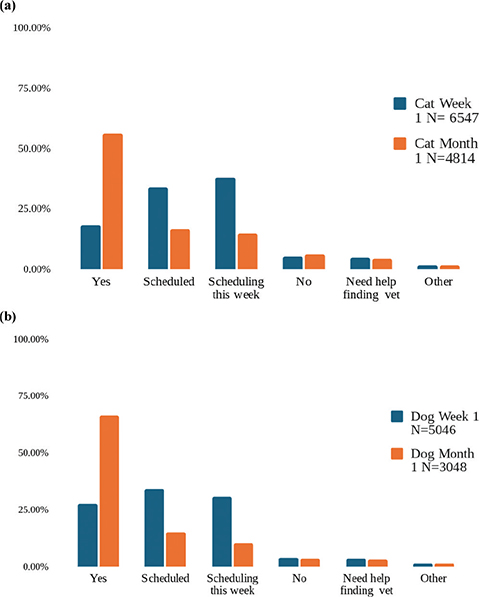
Fig. 1. (a and b) Responses to the question about whether the adopted cat (1a) or dog (1b) had their first veterinary visit as reported by adopters across three time points from the Petszel platform from 112 U.S. animal shelters.
By Month 1, 56% (2,760/4,907) of cat adopters responding at that time period had taken their cat for the first visit (297 no response to this question). For dogs, 66% (2,552/3,847) had done so (312 non-responses).
For the subset of cats in which the owners responded to both the Week 1 and Month 1 surveys, 78% (721/922) went from ‘scheduled’ to ‘had first appointment’; 22% (186/860) of ‘planning to schedule this week’ changed to ‘scheduled’, and another 42% (360/860) changed to ‘had the first appointment’. For the subset of dogs with both Week 1 and Month 1 responses, 80% (563/700) went from ‘scheduled’ in Week 1 to ‘had first appointment’ in Month 1; 27% (160/604) from ‘planning to schedule this week’ in Week 1 to ‘scheduled’, and another 48% (282/604) to ‘had the first appointment’. Of the cat adopters who needed help finding a veterinarian at Week 1, by Month 1, 13% (13/97) had an appointment scheduled and 22% (21/97) had their pets’ first appointment. Similarly for dog adopters needing help, 9% (5/59) had a scheduled appointment and 27% (16/45) had already had their dogs’ first appointment. Overall, 1,602 of 2,496 (64%) cat adopters and 1,484 of 2,054 (72%) dog adopters had the first veterinary visit by the Month 1 survey. Scheduling and attending the first visit increased between Week 1 and Month 1 for both species.
‘Have you registered/updated {{animal name}} identification and/or registered the microchip?’
During the Week 1 survey only, adopters were asked if they had registered their pets’ microchip. A total of 61% of cat and 62% of dog adopters responded yes (Fig. 2).
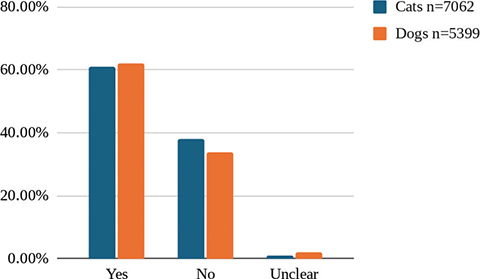
Fig. 2. Percentage of dog or cat adopters who had registered or updated their pet’s microchip at the Week 1 survey on the Petszel platform including 112 U.S. animal shelters.
Discussion
With 13,217 responses for the Day 1 survey, 12,461 for Week 1, and 9,449 Month 1, this data set represents, to our knowledge, the largest post-adoption data set ever analysed. Across all time points, most respondents rated their experience highly. Over 90% selected a score of 4 or 5 out of 5 on the ‘Overall how are things going?’ question, and more than 86% gave the highest score when asked if they would recommend the shelter. This was true even though 50% of cat adopters and more than 78% of dog adopters reported at least one challenge at Week 1 or Month 1.
This disconnect between high satisfaction and frequent challenges has been reported in multiple previous studies5, 7–12 and may suggest the strong commitment adopters feel towards their pets and the recognition that a successful pet adoption requires time and adjustment. It also highlights the limitation of relying on general satisfaction as the sole indicator of post-adoption success. A household may be experiencing ongoing problems – some of which may indicate stress or reduced welfare for the pet2,17–19 – yet still report that ‘things are going well’ or ‘no challenges’. Follow-up that probes for specific issues is therefore critical.
Differences in challenges between dogs and cats
The nature and frequency of reported challenges differed substantially by species. Given that approximately 50% of cat adopters and more than 78% of dog adopters reported at least one challenge, there is likely a need for additional support beyond what the included shelters are currently offering. These findings mirror earlier work, showing that dog adopters are more likely than cat adopters to report behaviour concerns.8,9 Among dogs in the present study, the most common issues were house training, excessive play biting, leash pulling, and separation distress/anxiety. For cats, fewer challenges were reported overall; the most common was fear/timidity/hiding. Understanding these species-specific patterns can inform targeted support strategies for adopters and their pets.
It is interesting that there was a low prevalence of reports of aggression, be it food or other resource guarding, interspecies, fear related or otherwise. This does mirror findings from most studies examining prevalence of aggression in the home.20–22 Even though prevalence of aggression is not high, because the consequences can be severe, early recognition of potential aggression and intervention for potential challenges (through meaningful follow-up and support) can be impactful.
House training was among the top challenges for dog adopters, with 32% reporting issues with urination and/or defecation in home. Elimination challenges can cause strain to the bond and can increase risk of relinquishment.23 Pre-adoption counselling has been shown to decrease challenges in the home,24 and given the prevalence of issues, it is worthwhile for dogs at high risk for elimination challenges in home (e.g. puppies and adult dogs with opportunities to eliminate outside who still choose to eliminate in their kennels), to provide a short counsel and proactive follow-up to decrease risk. Further, for shelters with dog walking programmes, dogs can be taught elimination cues that can then be used by the adopter to help assure continuity and a familiar pattern for the dog to increase success.
The prevalence of litterbox issues was low (just 4% at Week 1 and 5% at Month 1). While there is little published literature on the prevalence of litterbox issues in U.S. owned cats, two studies outside of the U.S. found the prevalence to be between 17 and 19%.25,26 However, those surveys did not differentiate between occasional versus chronic litter box challenges. The low prevalence in this study could be due to a variety of reasons such as shelter decisions regarding adoptability, appropriate counselling at time of adoption to mitigate issues, access to information regarding successful litterbox use through the shelter or post adoption platform, adopters allowing cats to go outdoors, and others. While the incidence is low, litterbox issues are frequently cited by owners as reason for relinquishment.27,28 Therefore, early follow up, counsel, and recommendations to consult with a veterinarian when needed may help decrease risk of return.
Fear, socialisation, and environmental adjustment
Fear/timidity/hiding were the most reported challenges for cats. A total of 19% of cat adopters reported this challenge at Week 1 while this dropped to 14% at Month 1, suggesting that some of these cats were acclimating to their new environment. It is important to note that the majority of cat adopters did not report this as a concern. This could be because some adopters were counselled at the time of adoption about what to expect when they brought their new cat home and did not perceive the behaviour as fear but instead normal acclimation. This finding does highlight that cats enter shelters with a broad spectrum of socialisation to people, ranging from feral and fearful of people to socialised pets choosing the company of people.29 A similar proportion of canine adopters (14% at both time points) also reported fear/timidity/hiding as a concern. In addition, introduction to existing pets was reported as not going well by 10% of cat adopters and 9% of dog adopters. These interrelated issues suggest that many newly adopted pets require additional time and environmental management to acclimate successfully. Shelters could prepare adopters by providing guidance on gradual introductions, creating safe spaces, and recognising signs of stress during the adjustment period.
Destructive behaviours and age-related considerations
Destructive chewing/scratching in dogs and destructive scratching in cats represented common challenges, with notable patterns over time. For cats, destructive scratching was reported by fewer adopters but doubled between Week 1 and Month 1. For dogs, destructive chewing was very common and also increased over the same period. This temporal increase could represent an actual escalation in these normal behaviours as pets become more comfortable and active in their new homes, or it could reflect response bias, with adopters experiencing these issues being more likely to complete later surveys. The increase may also be due to behaviours that were tolerated and not seen as challenges early on, but over time became bothersome. The median age at adoption was young for both species – approximately 4.7 months for cats and around 1 year for dogs. Young animals are naturally more energetic and exploratory, which may contribute to higher rates of excessive play biting, destructive behaviours, and other activity-related challenges. Shelters and veterinarians could provide age-specific guidance on appropriate outlets for energy (such as interactive play, enrichment activities, and appropriate chew items or scratching posts), as well as information on developmental stages and when certain behaviours typically diminish with maturity.
Species-specific support recommendations
These findings highlight the value of species-specific support. For example, shelters could prepare dog adopters for common behaviours such as play biting and offer early resources on house training and enrichment. For cats, guidance on acclimation and environmental management could reduce the likelihood of these problems threatening the human–animal bond.30,31 Less common but important cat challenges included litter box issues and poor appetite. Litter box issues are often considered a strong risk to the bond and can be a behaviour without a live outcome opportunity for some shelters.28
Early veterinary engagement
For this survey, veterinary engagement was defined as an adopter scheduling or completing their first veterinary visit following adoption. Many respondents had scheduled or completed a first veterinary visit within the first month. By Month 1, 56% of cat adopters and 66% of dog adopters reported that the visit had occurred. Early establishment of a veterinary relationship is important not only for physical health but also for first line behaviour challenge identification. Because adopters may not spontaneously mention behaviour concerns if asked only ‘How is it going?’ veterinarians can play a role in identifying issues by asking specific, behaviour-focused questions during initial visits. Shelters could provide guidance and resources about commonly seen behaviour issues post-adoption to area veterinarians making it easier for veterinarians to connect adopters to the right resources. This proactive approach could improve welfare and strengthen the clinic–client relationship as well as improve shelter-veterinarian interactions.
Microchip registration
Although all participating shelters microchipped their animals, and all the shelter software programmes automatically registered microchips to the person completing the adoption agreement, it is recommended that adopters augment this initial contact information with back-up contact methods and additional people who can be reached if needed. More than one-third of adopters reported that they had not registered or updated their pet’s microchip information by the Week 1 survey. This may indicate that adopters were unaware of the need to update the information and points to an opportunity for more proactive engagement regarding microchip registration and information updates. It is likely that the degree to which shelters explained auto-registration and microchip updates to adopters differed across shelters; this variation could have influenced these results, but this dataset does not capture information on how the shelters may or may not have communicated on these topics. Since microchips only function as intended when contact information is current, failure to verify or update information could lead to a critical gap in lost-pet recovery. Previous work has shown that simply providing an ID tag or instructions is less effective than walking owners through the process or doing it for them.32,33 Shelters and veterinarians can improve compliance by incorporating microchip registration into the adoption or first-visit process – ideally with the adopter present and completing the update before leaving the shelter or clinic. While many shelter management software systems register microchips to the adopter automatically at the time of adoption using the adopter’s information, shelters should emphasise to the adopter the need to validate, add to, and update their information to ensure that the microchip serves its intended purpose.
Recommendations for shelter software and veterinary practice integration
The findings from this study suggest several concrete opportunities for shelter management software companies and veterinary practitioners to improve post-adoption outcomes. Firstly, shelter software systems could incorporate standardised microchip verification prompts that appear at adoption checkout, requiring staff to demonstrate the registration process with adopters present rather than relying on automatic background registration. Given that more than one-third of adopters reported not registering their microchip by Week 1 despite automatic registration through shelter software, a visual confirmation step could bridge this awareness gap.
Secondly, veterinary practice management software could incorporate adoption-specific intake protocols that prompt veterinarians to ask standardised, behaviour-focused questions during first visits. Since general satisfaction questions may mask underlying welfare concerns, veterinary teams could use brief, validated screening tools that probe for the most common species-specific challenges identified in this study – such as house training, excessive play biting, and separation distress/anxiety in dogs, or fear and litter box issues in cats. This approach would help identify problems early when intervention is most effective.
Thirdly, shelter software could flag adoptions of young dogs (under 18 months) or dogs exhibiting specific behaviours in the shelter to trigger automated recommendations for training resources. Integration between shelter management systems and local trainer directories could streamline these referrals. Similarly, for the 56% of cat adopters and 34% of dog adopters who had not yet completed their first veterinary visit by Month 1, automated reminders with direct scheduling links to local veterinary practices could improve engagement and establish crucial preventive care relationships.
Limitations
The questions asked were designed to gather information in a brief interaction to inform shelters about the post-adoption experience and potential challenges to provide support. This made analysis more challenging by introducing limitations from the available data. This study represents a subset of adopters from shelters that chose to use the Petszel platform. Nonetheless, the information is valuable for pet care providers. It also provides a dataset of unprecedented size, allowing for a unique window into the post-adoption experiences of adopters.
Participation was voluntary, and non-response bias is possible. To improve response rates, multiple contacts via email and text were used which may decrease bias.34 It is possible that there were invalid emails or cell phone numbers; however, this would be minimised due to the short time period post-adoption. There could still be some human error in recording these data.35 We were unable to collect data on bounces or similar non-response or adopter demographics which could influence response bias such as language (fielded only in English) or socioeconomic status. We considered adopted animals to be statistically independent for this analysis; that is likely only partially true as some adopters did complete surveys on more than one animal. It is also possible that some adopters at participating shelters elected not to be included in the platform.
However, non-response does not equate to non-response bias. Instead, non-response bias is due to a relationship between the likelihood of participation and the variable being studied.36 It seems plausible that difficulties in the initial email or text reaching adopters were not related to the topic of the survey – how things are going in the home. However, refusals, break offs, and item non-response could be related to the adoption experience, the adopted animal, or lack of ability to understand or provide an accurate response to the question with minimal burden due to respondent health, time constraints, or household characteristics.
A meta-analysis of the influence of non-response rates on bias showed that self-administered, specific population focused surveys on behaviour with salient topics, all of which apply here, had lower measures of bias.37 Recent research has shown that low response rates are common and yet may not lead automatically to less valid data.34,37,38 Instead, lower responses increase the potential for bias, but do not necessarily cause it or influence its magnitude. It is plausible that poor experiences with the shelter or adopted pet influenced rapport and subsequent decisions to respond to the survey and individual questions.35,39 We are not aware of any data indicating how these shelter or animal experiences influence response rates. Self-reporting bias, especially social desirability bias, could have been an issue if adopters wanted to support the shelter or please any potential future researchers.36 This could have made the positive responses more common. Responses did include a range of experiences, from highly satisfied adopters to those expressing dissatisfaction with the shelter, pet health, or unmet expectations despite negative experiences being much less common than positive ones. For these reasons, we chose to use a descriptive approach to help avoid over-interpretation of results.
The survey design could also lead to bias or inaccuracy. There were two lists of common aspects of post-adoption care and behaviour based on experience with animal shelters and adoptions, one for what was going well and one for what was a challenge. These lists served as prompts for responders to indicate if a response applied to them. Check lists lack contextual detail on frequency, severity, or adopter expectations which can influence perception and therefore responses.39,40 For challenges to have a yes response, the care or behaviour had to be both not going well and perceived to be a ‘challenge’ by the adopter responding to the survey. ‘Challenge’ could be defined in many ways by the adopter. To make the survey easier to complete and improve the ability to analyse responses (decrease instrument bias), future iterations could merge and clarify ‘what is going well’ and ‘challenges’ lists. Because surveys were designed for shelter feedback rather than research, some relevant topics – such as direct questions about pet health and returns to the shelter – were not assessed. This lack is a missed opportunity to learn about the health challenges adopters face and adoption success.
Conclusion
Most adopters were highly satisfied with their pets despite frequent reports of post adoption challenges, particularly in dogs. This suggests a savvy awareness on the part of adopters that pets require an adjustment period following adoption. By Month 1, more than half of adopters had completed their first veterinary visit. While the timing of this visit may depend on individual medical needs such as vaccination schedules or preventive medication, establishing a veterinary relationship early in the post-adoption period provides a foundation for ongoing care and behavioural support. Microchip registration showed similar patterns, with opportunities for improved adopter education and hands-on support. These findings suggest that simple ‘satisfaction’ questions may mask underlying issues and potential welfare concerns. Species-, and potentially age-specific counselling, proactive veterinary involvement, and hands-on, in shelter, microchip registration could strengthen the human-animal bond while supporting pet welfare.
Author contributions
MS - Conceptualization, Data Curation, Methodology, Formal Analysis, Visualization, Writing-Original Draft, Writing – review & editing.
EW - Conceptualization, Writing - Original Draft, Writing – review & editing.
JKL - Conceptualization, Writing – review & editing.
MG - Conceptualization, Data Curation, Funding acquisition, Methodology, Writing – review & editing.
Acknowledgments
The authors would like to thank the shelters for participating in Petszel for their adopters and the adopters for both adopting their dogs and cats and answering survey questions. We are grateful to our copy editor Logan Martino.
Author notes
None.
References
| 1. | Kent M. 2024 AVMA Pet Ownership and Demographics Sourcebook. American Veterinary Medical Association; 2024:1–42. |
| 2. | Amat M, Camps T, Manteca X. Stress in owned cats: behavioural changes and welfare implications. J Feline Med Surg. 2016;18(8):577–586. doi: 10.1177/1098612X15590867 |
| 3. | Bradley J, Rajendran S. Increasing adoption rates at animal shelters: a two-phase approach to predict length of stay and optimal shelter allocation. BMC Vet Res. 2021;17(1):70. doi: 10.1186/s12917-020-02728-2 |
| 4. | Buckland EL, Giragosian K, Jordan EJ, Da Costa REP, Woodward JL, Casey RA. New strategies of canine post-adoption support: methods for a prospective longitudinal cohort study. Animals. 2025;15(9): 1232. doi: 10.3390/ani15091232 |
| 5. | Powell L, Reinhard C, Satriale D, Morris M, Serpell J, Watson B. Characterizing unsuccessful animal adoptions: age and breed predict the likelihood of return, reasons for return and post-return outcomes. Sci Rep. 2021;11(1): 8018. doi: 10.1038/s41598-021-87649-2 |
| 6. | Ellis JJ, Janke KJ, Furgala NM, Bridge T. Post-adoption behavior and adopter satisfaction of cats across socialization likelihoods. J Shelter Med Community Anim Health. 2025;4(1):116. doi: 10.56771/jsmcah.v4.116 |
| 7. | Gates MC, Zito S, Thomas J, Dale A. Post-adoption problem behaviours in adolescent and adult dogs rehomed through a New Zealand animal shelter. Animals. 2018;8(6):93. doi: 10.3390/ani8060093 |
| 8. | Lord LK, Reider L, Herron ME, Graszak K. Health and behavior problems in dogs and cats one week and one month after adoption from animal shelters. J Am Vet Med Assoc. 2008;233(11):1715–1722. doi: 10.2460/javma.233.11.1715 |
| 9. | Scott S, Jong E, McArthur M, Hazel SJ. Follow-up surveys of people who have adopted dogs and cats from an Australian shelter. Appl Anim Behav Sci. 2018;201:40–45. doi: 10.1016/j.applanim.2017.12.021 |
| 10. | Beaver BV. The prevalence of behavior problems in dogs in the United States. J Vet Behav. 2024;76:34–39. doi: 10.1016/j.jveb.2024.11.001 |
| 11. | Bohland KR, Lilly ML, Herron ME, Arruda AG, O’Quin JM. Shelter dog behavior after adoption: using the C-BARQ to track dog behavior changes through the first six months after adoption. PLoS One. 2023;18(8):e0289356. doi: 10.1371/journal.pone.0289356 |
| 12. | Marston LC, Bennett PC, Coleman GJ. Adopting shelter dogs: owner experiences of the first month post-adoption. Anthrozoös. 2005;18(4):358–378. doi: 10.2752/089279305785593965 |
| 13. | Ramos D, Reche-Junior A, Luzia Fragoso P, et al. A case-controlled comparison of behavioural arousal levels in urine spraying and latrining cats. Anim Open Access J MDPI. 2020;10(1):117. doi: 10.3390/ani10010117 |
| 14. | Lord LK, Ingwersen W, Gray JL, Wintz DJ. Characterization of animals with microchips entering animal shelters. J Am Vet Med Assoc. 2009;235(2):160–167. doi: 10.2460/javma.235.2.160 |
| 15. | Kremer T. Post: Lost Pet Reunification. HASS Data Is Clear – Microchips Work, and They Could Work Even Better. 2023. https://www.humananimalsupportservices.org/uncategorized/new-analysis-pets-with-microchips-are-three-times-more-likely-to-get-home/. Accessed July 24, 2025. |
| 16. | American Association for Public Opinion Research. Standard Definitions: Final Dispositions of Case Codes and Outcome Rates for Surveys. AAPOR; 2023:1–90. |
| 17. | Townsend L, Dixon L, Buckley L. Lead pulling as a welfare concern in pet dogs: what can veterinary professionals learn from current research? Vet Rec. 2022;191(10):e1627. doi: 10.1002/vetr.1627 |
| 18. | Harvey ND, Christley RM, Giragosian K, et al. Impact of changes in time left alone on separation-related behaviour in UK pet dogs. Anim Open Access J MDPI. 2022;12(4):482. doi: 10.3390/ani12040482 |
| 19. | Quinn R, Masters S, Starling M, et al. Functional significance and welfare implications of chewing in dogs (Canis familiaris). Front Vet Sci. 2025;12:1499933. doi: 10.3389/fvets.2025.1499933 |
| 20. | Serpell JA, Powell L. Prevalence and Severity of Behavior Problems in Dogs in the United States: A Re-Assessment. Social Science Research Network. Preprint posted online July 31, 2025. doi: 10.2139/ssrn.5374383 |
| 21. | Tiira K, Sulkama S, Lohi H. Prevalence, comorbidity, and behavioral variation in canine anxiety. J Vet Behav. 2016;16:36–44. doi: 10.1016/j.jveb.2016.06.008 |
| 22. | Yamada R, Kuze-Arata S, Kiyokawa Y, Takeuchi Y. Prevalence of 25 canine behavioral problems and relevant factors of each behavior in Japan. J Vet Med Sci. 2019;81(8):1090–1096. doi: 10.1292/jvms.18-0705 |
| 23. | Salman MD, Hutchison J, Ruch-Gallie R, et al. Behavioral reasons for relinquishment of dogs and cats to 12 shelters. J Appl Anim Welf Sci. 2000;3(2):93–106. doi: 10.1207/S15327604JAWS0302_2 |
| 24. | Herron ME, Lord LK, Hill LN, Reisner IR. Effects of preadoption counseling for owners on house-training success among dogs acquired from shelters. J Am Vet Med Assoc. 2007;231(4):558–562. doi: 10.2460/javma.231.4.558 |
| 25. | Lawson GT, Langford FM, Harvey AM. The environmental needs of many Australian pet cats are not being met. J Feline Med Surg. 2020;22(10):898–906. doi: 10.1177/1098612X19890189 |
| 26. | Tateo A, Ricci-Bonot C, Felici M, et al. Litter management practices and house-soiling in Italian cats. Anim Open Access J MDPI. 2023;13(14): 2382. doi: 10.3390/ani13142382 |
| 27. | New JC, Salman MD, King M, Scarlett JM, Kass PH, Hutchison JM. Characteristics of shelter-relinquished animals and their owners compared with animals and their owners in U.S. pet-owning households. J Appl Anim Welf Sci. 2000;3(3):179–201. doi: 10.1207/S15327604JAWS0303_1 |
| 28. | Liu S, Sung W, Welsh S, Berger JM. A six-year retrospective study of outcomes of surrendered cats (Felis catus) with periuria in a no-kill shelter. J Vet Behav. 2021;42:75–80. doi: 10.1016/j.jveb.2020.12.002 |
| 29. | Halls V, Dowgray N, Ellis SLH, Taylor S, Bessant C. Cat friendly principles for those working with unowned cats. J Shelter Med Community Anim Health. 2023;2(S1):63. doi: 10.56771/jsmcah.v2.63 |
| 30. | American Humane Association. Keeping Pets (Dogs and Cats) in Homes: A Three-Phase Retention Study. Phase I: Reasons for Not Owning a Dog or Cat. American Humane Association; 2012:1–53. https://www.americanhumane.org/app/uploads/2016/08/aha-petsmart-retention-study-phase-1.pdf. Accessed July 24, 2025. |
| 31. | American Humane Association. Keeping Pets (Dogs and Cats) in Homes: A Three-Phase Retention Study. Phase II: Descriptive Study of Post-Adoption Retention in Six Shelters in Three U.S. Cities. American Humane Association; 2013:1–53. https://www.americanhumane.org/app/uploads/2016/08/petsmart-keeping-pets-phase-ii.pdf. Accessed July 24, 2025. |
| 32. | Miller TR, Bergen G, Ballesteros MF, Bhattacharya S, Gielen AC, Sheppard MS. Increasing smoke alarm operability through theory-based health education: a randomised trial. J Epidemiol Community Health. 2014;68(12): 1168. doi: 10.1136/jech-2014-204182 |
| 33. | Weiss E, Slater MR, Lord LK. Retention of provided identification for dogs and cats seen in veterinary clinics and adopted from shelters in Oklahoma City, OK, USA. Prev Vet Med. 2011;101(3):265–269. doi: 10.1016/j.prevetmed.2011.05.008 |
| 34. | Rybak A. Survey mode and nonresponse bias: a meta-analysis based on the data from the international social survey programme waves 1996–2018 and the European social survey rounds 1 to 9. PLoS One. 2023;18(3):e0283092. doi: 10.1371/journal.pone.0283092 |
| 35. | Barriball KL, While AE. Non-response in survey research: a methodological discussion and development of an explanatory model. J Adv Nurs. 1999;30(3):677–686. doi: 10.1046/j.1365-2648.1999.01117.x |
| 36. | Groves RM, Fowler FJ, Jr, Couper MP, Singer E, Tourangeau R. Survey Methodology. 2nd ed. John Wiley & Sons, Inc.; 2009. |
| 37. | Groves RM, Peytcheva E. The impact of nonresponse rates on nonresponse bias: a meta-analysis. Public Opin Q. 2008;72(2):167–189. doi: 10.1093/poq/nfn011 |
| 38. | Morton SMB, Bandara DK, Robinson EM, Carr PEA. In the 21st century, what is an acceptable response rate? Aust N Z J Public Health. 2012;36(2):106–108. doi: 10.1111/j.1753-6405.2012.00854.x |
| 39. | Dillman DA, Smyth JD, Christian LM. Internet, Phone, Mail, and Mixed-Mode Surveys: The Tailored Design Method. 4th ed. John Wiley & Sons, Inc.; 2014. |
| 40. | Tourangeau R, Rips LJ, Rasinski K. The Psychology of Survey Response. Cambridge University Press; 2000. |