ORIGINAL RESEARCH ARTICLE
A Retrospective Study of Canine Outcomes and Length of Stay in a Midwestern Shelter Subject to Breed-Specific Legislation
Sandra Kay Walker1, Lauren Powell2 and Elizabeth A. Berliner3,4
1Heartland Shelter Medicine, Kansas City, MO, USA; 2Department of Clinical Sciences & Advanced Medicine, University of Pennsylvania School of Veterinary Medicine, Philadelphia, PA, USA; 3Shelter Medicine Services, American Society for Prevention of Cruelty to Animals, New York, NY, USA; 4Department of Population Medicine and Diagnostic Sciences, Cornell University College of Veterinary Medicine, Ithaca, NY, USA
Abstract
Introduction: Breed-specific legislation (BSL) is intended to restrict or reduce the ownership of selected breeds of dogs within a municipality. These laws frequently aim at ‘bully breeds’ such as the American Pit Bull Terrier and other pure or mixed breeds with similar phenotypic characteristics, which are heavily represented in animal shelters nationwide. This retrospective cohort study investigated differences in outcomes and length of stay (LOS) for legislated dogs versus dogs of other breeds in a managed admission municipal shelter subject to BSL.
Methods: Retrospective outcome data from January 1, 2022 through December 31, 2022 were analyzed. The study population included 764 adult dogs of which 118 were legislated breeds.
Results: Analysis of the full study population found legislated dogs were more likely to be euthanized (x2(4) = 23.76, p < 0.001) and experience a longer LOS (U = 32858.50, z = -2.385, p = 0.017). Non-legislated breeds were more likely to be adopted (x2(4) = 23.760, p < 0.001). In a weight-matched subset of dogs weighing 14.1–30.6 kg (n = 424, including 339 non-legislated and 85 legislated dogs), there was no longer a significant difference between the groups in the rate of live versus non-live outcomes (X2(1) = 2.022, p = 0.179); however, legislated dogs experienced a significantly longer LOS to adoption (U = 2039.00, Z = -2.04, p = 0.041) and return-to-owner (U = 1725.50, Z = -3.33, p = 0.001) and a reduced likelihood of adoption (x2(3) = 11.454, p = 0.010). Additional analysis performed for 80 dogs whose first outcome was euthanasia revealed non-legislated dogs were significantly more likely to be euthanized for medical reasons than legislated dogs, and there were no significant differences in euthanasia for aggressive behavior or behavioral evidence of poor quality of life (x2(2) = 6.528, p = 0.038).
Conclusion: Shelter dogs subject to BSL generally experience barriers to live outcomes. In this shelter, staff endeavored to find live outcomes for these dogs, including transport and reunification. Overturning BSL would support increased live outcomes, including family reunification, for legislated dogs.
Keywords: retrospective studies; dogs; pit bull; phenotype; public health; quality of life; euthanasia
Citation: Journal of Shelter Medicine and Community Animal Health 2026, 5: 146 - http://dx.doi.org/10.56771/jsmcah.v5.146
Copyright: © 2026 S.K. Walker et al. This is an Open Access article distributed under the terms of the Creative Commons Attribution 4.0 International License (http://creativecommons.org/licenses/by/4.0/), allowing third parties to copy and redistribute the material in any medium or format and to remix, transform, and build upon the material for any purpose, even commercially, provided the original work is properly cited and states its license.
Received: 26 August 2025; Revised: 6 November 2025; Accepted: 14 November 2025 Published: 20 February 2026
Competing interests and funding: The authors declare no potential conflicts of interest. No funding was provided for this study beyond normal shelter operations and care.
Correspondence: Sandra Kay Walker. Email: drwalker@heartlandsheltermed.org
Reviewers: Darlene Duggan; Patrick Carney
Breed-specific legislation (BSL) regulates dog ownership by restricting ownership of select breeds. BSL ostensibly exists to protect public health and safety by targeting breeds perceived to be more dangerous than other dogs.1 However, much of the current literature suggests breed-specific bans do not improve public safety.2,3 Wyker and Gupta found that BSL in Missouri had not reduced emergency room admissions for dog bite injuries, a finding consistent with reports they cited from Canada, Spain, Ireland, Scotland, The Netherlands, and Denmark.3 BSL also diverts resources from more fruitful public safety measures such as programs that focus on responsible ownership, dog behavior, and bite prevention education.4
In jurisdictions with BSL, legislated dogs entering shelters can be seriously impacted and may be at increased risk for euthanasia.5 BSL-related policies are barriers to live outcomes, putting medically and behaviorally healthy individuals at risk of euthanasia. BSL-related policies are also barriers to placement and have the potential to increase length of stay (LOS), an important sheltering metric that affects both individual and population health.6 A multi-state study in 2021 found that shelters subject to BSL intake greater numbers of animals than those whose communities were BSL free, and conjectures the increased intakes could be due to the intake of a greater number of legislated animals.7
BSL is frequently aimed at ‘pit bull’ dogs. As pit bulls are considered a breed type, and not one specific breed, the definition of a pit bull is inconsistent in both legislation and scientific literature.1,4,5,8 Genomic research has found a high degree of breed admixture in the canine population, where 66% of US-mixed breed dogs have genetic contributions from four or more breeds. In 70% of these dogs, the genetic contribution from any single breed was less than 45% of the individual’s total DeoxyriboNucleic Acid (DNA).9 Even when DNA analysis is used, genetic breed definitions will differ based on the database used, and as the databases grow over time, differing results can be obtained for the same animal.10 DNA analysis is not typically used in shelters due to cost and the ambiguous nature of results in the context of a primarily mixed breed population.
Identifying breed of dogs of unknown lineage (most shelter dogs) is also complicated by the use of visual cues to assign breed labels. The sole use of physical traits for ‘pit bull’ breed identification has been found to be an unreliable methodology. At least two studies have found visual identification of pit bull-type dogs to be both inconsistent and inaccurate.5,8 However, another study found shelter staff somewhat successful at identifying pit bull-type mixes based on visualization; for dogs with 75% or higher pit bull-type DNA, staff were 92% successful at pit bull identification. In the same study, mixed breed dogs with pit bull-type DNA averaged only a 38.5% contribution of pit bull-type genetics, making it a minority of their genetic make-up.1
Regardless of how breed is determined, American Pit Bull Terriers and other ‘pit bull-type’ dogs are some of the most common occupants of US shelters.1,9 A growing body of evidence demonstrates these dogs are subject to extra risks when compared to other breed types, including increased risk of euthanasia, longer LOS, and being returned to the shelter after placement.1,11,12 In fact, simply being labeled as a ‘pit bull’ reduces attractiveness to potential adopters.13 BSL targeting ‘pit bull’ types creates an additional antagonistic factor in legislated jurisdictions and puts these dogs at greater risk for euthanasia.5
This retrospective cohort study investigated differences in outcomes and LOS for banned ‘pit bull’-type dogs versus dogs of other breeds in a managed admission municipal shelter subject to BSL. We hypothesized that in this population, BSL-affected dogs would experience a greater LOS and fewer positive outcomes than non-legislated dogs. Additionally, when euthanasia was an outcome, reasons for euthanasia of legislated dogs were compared to those of non-legislated breeds.
Materials and methods
Study shelter
The study shelter is a managed admission, municipal facility, which serves a Midwestern city of approximately 123,000 people with a median household income of $52,919 with approximately 16.2% of the population below the poverty line.14 In 2022, the shelter reported an intake of 1,547 animals with a 94.1% live release rate for all species.15
In 2006, the local government passed an ordinance banning ‘pit bulls’ within the city limits, defining pit bulls as ‘any dog that is an American Pit Bull Terrier, American Staffordshire Terrier, Staffordshire Bull Terrier, or any dog displaying the majority of physical traits of any one or more of the above breeds’.16 In 2022, the law remained unchanged and was subject to enforcement. The shelter adhered to a policy disallowing city residents from adopting legislated dogs. The shelter was also unable to process owner returns for legislated dogs to home addresses within the city limits.
Despite these constraints, the shelter continued to seek live outcomes for legislated dogs, including returning legislated dogs to their owners when owners reported they were able to rehome or relocate the dog outside of the jurisdiction, and adopting these dogs to applicants from neighboring jurisdictions without BSL.
In this shelter, intake and animal control staff were primarily responsible for entering individual dog data into the shelters’ software system (PetPoint 5, Pethealth Software Solutions). Variables included breed identification, estimated age based on dental examination, sex, spay/neuter status, and measured weight. Breed identification was performed by shelter managers, intake staff, veterinary staff, and animal control officers based on visual evaluation of physical traits. Breed, age, and/or sex/alter status could be later modified in the software if reported attributes were determined by veterinary staff or shelter managers to be inaccurate. Animal weights were routinely updated by animal care and veterinary staff during regular care.
Dataset preparation
The retrospective work described involved the use of secondary data from care already provided in this shelter setting. Procedures followed standard (‘best practice’) of care for the individual patient as well as the shelter population. Ethical approval was provided by ASPCA’s internal Committee on Animals as Research Participants and Ethics (CARPE).
Retrospective data were gathered for all canine outcomes between January 1st, 2022 and December 31st, 2022, using software-generated outcome reports. Data from these reports were compiled into an Excel spreadsheet (Microsoft 365, version 2301, 2023). Variables collected directly from reports included primary identified breed, age, weight, sex, alter status at time of intake, alter status at time of outcome, intake type, LOS, and outcome type. Possible outcome types were Adoption, Return to Owner (RTO), Transfer Out, Died, or Euthanasia, as was entered into the software system by shelter staff. The final weight measurements prior to outcome were used.
The initial dataset included 1,042 outcomes representing 942 dogs (See Fig. 1). Entries related to staff training activities and a microchip event (38) reflected a subset of dogs never housed at the shelter and were excluded. Puppies (140 dogs aged 8 months and younger, which was the shelter’s definition of ‘puppy’) were also excluded from the final study dataset, given that puppies have multiple additional variables impacting LOS and outcome type (e.g. being too young for adoption at the time of intake, possessing immature immune systems increasing their susceptibility to disease, increased adoptability, and decreased frequency of euthanasia).11,17 Individual dogs (73) with more than one outcome event were identified, and their data were combined so that each dog was listed only once in the final database, resulting in a dataset of 764 individual dogs.
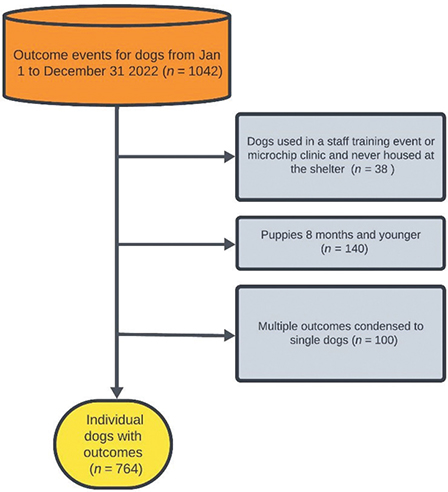
Fig. 1. Inclusion/Exclusion diagram of outcomes for shelter dogs in a study of canine outcomes in a US municipal shelter subject to breed-specific legislation.
For individual dogs with multiple outcomes, a new variable for Intake Frequency (Multiple Intake, yes/no) was created, expanding Outcome Type into First Outcome and Final Outcome, and the LOS category into First LOS and Total Length of Care. For dogs with a single outcome, the values for First Outcome and LOS equaled the values for Final Outcome and Total Length of Care, respectively. For dogs with multiple outcomes, the values for First Outcome and LOS represented their initial shelter stay, Final Outcome represented the last outcome during the study period, and Total Length of Care was calculated by adding the LOS of each shelter stay during the study period.
For individuals with more than one breed listed, the designation of primary breed was based on the first breed listed in the dog’s record. A variable for legislative status was added to the database: dogs with a primary breed designation of American Pit Bull Terrier, American Staffordshire Terrier, and Pit Bull Terrier were identified as legislated; no dogs were identified as Staffordshire Bull Terriers. All other breeds were assigned non-legislated status.
An indirect analysis of behavior was performed by comparing euthanasia reasons for the 80 dogs whose first outcome was euthanasia. This required retroactive coding of individual dogs, as software records did not differentiate if the primary reason for behavioral euthanasia was aggressive behavior versus behavioral decline attributed to environmental stress and poor quality of life (QOL). We developed an aggression code (AGR) for dogs that were court designated as an aggressive/dangerous/vicious dog or if the dog had observed behaviors which would warrant such a designation based on a city ordinance had charges been filed.1 A QOL code was used for dogs with fearful, inappropriate, and/or stereotypic behaviors attributed to high levels of fear, anxiety, or stress in the shelter environment. A Medical code (MED) was used for cases, where illness or injury was the primary reason for electing euthanasia. To reduce opportunity for bias, a shelter staff member not involved with any other data analysis performed euthanasia outcome coding. This staff member was a Karen Pryor Academy trained professional who managed the shelter’s canine behavior and enrichment programing during the study period.
Statistical analysis
The statistical analyses were conducted in International Business Machines corporation (IBM) Statistical Product and Service Solutions (SPSS) Statistics (Version 29, September 2022). The distribution of the data was assessed based on visual inspection of histograms. Pearson Chi-Square tests were performed to compare demographic factors, outcome types, and euthanasia reasons for legislated versus non-legislated dogs. Post hoc tests were based on adjusted standardized residuals > 1.96. Based on Levene’s test for equality of variances, the Welch’s unequal variances t-test was used to compare the mean weight between legislated and non-legislated groups. For non-normal data, a Mann-Whitney U-test was performed to analyze differences in LOS between legislated versus non-legislated dogs. P values < 0.05 were considered statistically significant.
Results
Study population
The final study dataset included 764 individual dogs with 86 primary breeds identified. The most common primary breed identified was the American Pit Bull Terrier with 115 individuals or 15.0% of the total population. Other identified breeds heavily represented in the population were Labrador Retrievers, German Shepherds, and Huskies. The 118 dogs in the legislated group represented 15.4% of the study dataset and consisted of 115 dogs identified as primarily American Pit Bull Terrier and 3 dogs identified as primarily American Staffordshire Terrier (See Table 1).
Pearson Chi-Square tests revealed no significant differences in age group (X2(2) = 4.10, p = 0.13), sex (X2(2) = 0.46, p = 0.54), previous alter status (X2(2) = 2.51, p = 0.14), intake type (X2(7) = 12.13, p = 0.07), or intake events per dog (X2(2) = 0.35, p = 0.56) between legislated and non-legislated dogs. Most dogs (66.6%) entered the shelter as a stray for their first intake. Other common intake reasons included animal control activity such as public safety seizures (14.7%) and assistance to police or fire department personnel (9.8%) (See Table 2).
Legislated dogs weighed significantly more than non-legislated dogs (t(213.56) =5.23, p < 0.001). Weight data were available for 554 dogs in the study set (range 1.7–56.8 kg), with a mean of 25.50 kg (SD 5.38 kg) among legislated dogs and 21.60 kg (SD 10.23 kg) among non-legislated dogs, a statistically significant difference of 3.92 kg (95% CI 2.45, 5.40). Because size can impact adoptability,11 a subset study group was formed for additional analysis of outcome type and LOS that included only dogs within the same weight range of the legislated group 14.1–30.6 kg.
Outcomes
For all dogs, RTO was the most common first outcome type (48.6%) followed by adoption (36.5%). Live outcomes (i.e. RTO, adoption, and transfer) were heavily favored, comprising 88.9% of first outcomes. Euthanasia was the first outcome for 10.5% of the study population.
Pearson Chi-Square testing of the full study population (n = 764) revealed that non-legislated dogs were more likely to have a live first outcome than legislated dogs (X2(1) = 25.534, p < 0.001). The same was true when the analyses were repeated on final outcome data. When considering the outcome subtypes, legislated dogs were more likely to be euthanized as a first outcome, while non-legislated dogs were more likely to be adopted (X2(4) = 23.760, p < 0.001, Table 3). Relative Risk (RR) for non-live outcomes among legislated breeds compared to non-legislated breeds for the whole sample was 2.84 (95% CI 1.89–4.24).
| First outcome types: full study population (n = 764) | ||||||
| Legislated dogs | Non-legislated dogs | |||||
| n (%) | AR* | n (%) | AR* | |||
| Adoption1 | 31 (26.3) | -2.5 | 248 (38.4) | 2.5 | ||
| RTO1 | 54 (45.8) | -0.7 | 317 (49.1) | 0.7 | ||
| Transfer Out1 | 4 (3.4) | -0.3 | 25 (3.9) | 0.3 | ||
| Euthanasia1 | 28 (23.7) | 5.1 | 52 (8.0) | -5.1 | ||
| Died1 | 1 (0.8) | 0.3 | 4 (0.6) | -0.3 | ||
| Total1 | 118 (100.0) | 646 (100.0) | ||||
| Live outcomes2 | 89 (75.4) | -5.1 | 590 (91.3) | 5.1 | ||
| Non-live outcomes2 | 29 (24.6) | 5.1 | 56 (8.7) | -5.1 | ||
| First outcome types: weight-matched subset 14.1–30.6 kg (n = 424) | ||||||
| Legislated dogs | Non-legislated dogs | |||||
| n (%) | AR* | n (%) | AR* | |||
| Adoption3 | 29 (34.1) | -3.3 | 184 (54.3) | 3.3 | ||
| RTO3 | 43 (50.6) | 2.6 | 120 (35.4) | -2.6 | ||
| Transfer out3 | 3 (3.5) | 0.1 | 11 (3.2) | -0.1 | ||
| Euthanasia3 | 10 (11.8) | 1.4 | 24 (7.1) | -1.4 | ||
| Died3 | 0 (0.0) | 0 (0.0) | ||||
| Total3 | 85 (100.0) | 339 (100.0) | ||||
| Live outcomes4 | 75 (88.2) | -1.4 | 315 (92.9) | 1.4 | ||
| Non-live outcomes4 | 10 (11.8) | 1.4 | 24 (7.1) | -1.4 | ||
| Chi Square Test Results: 1. (x2(4) = 23.760, p < 0.001), 2. (x2 = 25.534, p < 0.001), 3. (x2(3) = 11.454, p = 0.010), 4. (x2(1) = 2.022, p = 0.179). *AR = Adjusted Residual; RTO = Return to Owner. An adjusted residual greater than 1.96 or less than -1.96 indicates the observed count is significantly different from what would be expected. The statistically significant values were bolded. |
||||||
Pearson Chi-Square testing was then repeated using only the weight-matched subset group weighing 14.1–30.6 kg (Table 3). RR for non-live outcome in legislated breeds compared to non-legislated breed in the weight-matched subset was 1.66 (95% CI 0.83–3.34). In the weight-matched subset, there was no longer a significant difference between the groups in the rate of live versus non-live outcomes (X2(1) = 2.022, p = 0.179). The same was observed when final outcome data were analyzed.
Weight-matched subgroup results revealed dogs in the legislated group were more likely to be RTO as a first outcome, while non-legislated dogs were more likely to be adopted (X2(3) = 11.454, p = 0.010).
Further analysis was performed on the reasons for euthanasia for the 80 dogs that were euthanized as their first outcome (Table 4). Non-legislated dogs were significantly more likely to be euthanized for medical reasons than legislated dogs, although there were no significant differences in euthanasia for aggressive behavior or QOL (x2(2) = 6.528, p = 0.038).
| Euthanasia reasons (n = 80) | ||||||
| Legislated dogs | Non-legislated dogs | |||||
| n (%) | AR* | n (%) | AR* | |||
| Aggression | 21 (75.0) | 1.5 | 30 (57.7) | -1.5 | ||
| QOL | 6 (21.4) | 0.7 | 8 (15.4) | -0.7 | ||
| Medical | 1 (3.6) | -2.6 | 14 (26.9) | 2.6 | ||
| Total | 28 (100.0) | 52 (100.0) | ||||
| Chi Square Test Results = (x2(2) = 6.528, p = 0.038). *AR = Adjusted Residual; QOL = quality of life. An adjusted residual greater than 1.96 or less than -1.96 indicates the observed count is significantly different from what would be expected. The statistically significant values were bolded. |
||||||
Length of stay
Analysis compared LOS of legislated dogs to non-legislated dogs, first as a full dataset and then in a weight-matched subset (Table 5). An independent Samples Mann-Whitney U Test demonstrated a statistically significant increase in LOS for legislated versus non-legislated dogs (U = 32858.500, z = -2.385, p = 0.017). When Mann-Whitney U testing was repeated using only the weight-matched subset to control for body weight, results failed to show a statistically significant difference in LOS between the legislated versus non-legislated dogs (U = 14685.000, z = 0.275, p = 0.784).
Further analysis of the weight-matched subset data compared LOS between the groups by outcome subtype. See Table 6. Legislated dogs had a significantly longer LOS prior to live outcomes than non-legislated dogs, including adoption (U = 2039.00, z = -2.04, p = 0.041) and RTO (U = 1725.50, z = -3.33, p = 0.001). Legislated dogs had a slightly shorter but not statistically significant LOS prior to euthanasia compared to non-legislated dogs (U = 135.00, z = 0.567, p = 0.589).
Discussion
BSL, such as the ban on pit bulls in this municipality, relies on phenotypic categorization of dog breeds. The study shelter, like most shelters, designated breed at intake based on phenotype. Therefore, dogs in this study were subject to legislation based on a subjective interpretation of their physical traits, even though multiple studies have demonstrated phenotype alone is not a reliable predictor of breed or behavior.5,8,9
Most legislated dogs entered this shelter as strays, and being returned to their owner was their most common outcome. This finding is remarkable, given that returning legislated dogs to the concerned address within the municipality was illegal unless owners could provide a clear plan for rehoming their dog or moving their family outside of the restricted areas. Notably, the median LOS for RTO was significantly longer for legislated dogs, suggesting barriers to reclamation associated with BSL – such as requiring a rehoming or relocation plan – delayed reunification. It is also likely that owners of banned dogs would be more hesitant to engage with the shelter to reclaim their lost pet, given the dog’s banned status.
Adoption outcomes also differed between legislated and non-legislated dogs. Even in the weight-matched subset, non-legislated breeds were more likely to be adopted than legislated breeds. This is unsurprising, given that BSL made the adoption of pit-bull-type breeds illegal within regulated boundaries. When adoptive placements were found, the median LOS to adoption for legislated dogs was significantly longer than that of non-legislated breeds (57.10 days versus 34.45 days). Of course, BSL was not the only barrier at play here, as biases based on phenotypic and cultural stereotypes likely played a role, consistent with an earlier study where dogs labeled as pit bull types were rated less attractive by adopters and experienced significantly longer LOS than dogs with similar appearances labeled as other breeds.13
Although a municipal shelter, the study’s shelter consistently reported an overall live release rate above 90%, and live outcomes (i.e. RTO, adoption, and transfer) were heavily favored within the study group (88.9% of first outcomes). In the full study population, legislated dogs experienced a significantly higher rate of euthanasia than non-legislated breeds. However, after controlling for weight, the euthanasia rates were not significantly different. Although this shelter was able to identify pathways to live outcomes, including transfer or adoption to other jurisdictions, this effort required both specific allowances for these activities within the BSL statute and very diligent work by shelter staff. It is important to acknowledge the extra resources that went into providing pathways to live outcomes while burdened by BSL; these resources include staff time, financial costs for extended LOS care, and psychological stress on shelter personnel.
The majority of euthanasia outcomes in this population were due to aggressive behavior, regardless of the animal’s legislative status. However, legislated dogs in this population were not statistically more likely to be euthanized for aggressive behaviors. Given the small sample size of euthanized dogs, we must acknowledge the risk of type II error in this aspect of analysis.
Like many sheltering organizations, this shelter provided spay/neuter and other services for community-owned animals. Although beyond the scope of this project, it is surmised that BSL limited access to care for legislated breeds in this community. Anecdotally, community members frequently reported being hesitant to present restricted breeds for temporary sheltering, spay/neuter, and other community services. The extent of this access to care deficit was unknown, but this observation reveals yet another way that BSL could place legislated dogs at risk for poor outcomes.
This study had several limitations. First, a retrospective study is always subject to recordkeeping error and incomplete data capture; this study excluded dogs identified as puppies but did include dogs for whom age was unknown. Second, breed identification in this shelter was based on visual inspection and phenotypic matching to the physical trait criteria of the local breed-specific ordinance, a method which has been demonstrated to be highly inaccurate and yet remains the standard method for identifying the legal status of dogs in BSL-regulated municipalities. It is likely some dogs labeled pit bull-type dogs in this study were, indeed, not genetically majority pit bull-associated breeds and vice versa. Third, within this study, it was impossible to control for the impact of BSL on outcomes and LOS for pit-bull-type dogs versus other factors such as adopter breed bias. Fourth, this study represents only a single shelter subject to very specific legislation in one community and with aggressive strategies to find live outcomes for dogs; the findings may not generalize to other shelters or communities. Finally, subgroup analyses resulted in a reduced sample size, meaning the weight-matched results are at greater risk of type II error (i.e. failure to detect a statistically significant difference when a difference exists).
The municipality in which this shelter is located repealed BSL in May of 2023. A future study of canine outcomes in this community, under less restrictive regulations, could provide additional information about the impact of BSL on this population.
Conclusion
In this shelter, legislated dogs experienced a significantly longer LOS to live outcomes (i.e. adoption and RTO) and a reduced likelihood of adoption compared to weight-matched non-legislated dogs. Legislated dogs in this study population also did not warrant a significantly higher rate of euthanasia for aggressive behavior than non-legislated dogs. When considered in context with earlier publications,1,5,11–13 this study supports the premise that dogs targeted by BSL should be considered an at-risk group within shelter populations. Sheltering professionals should endeavor to develop specific strategies to reduce LOS and identify placements for these dogs. Among these strategies, overturning BSL would support live outcomes, including family reunification, for these dogs.
Author contributions
SW – conceptualization, data curation and analysis, writing – original draft, review, and editing; LP – data analysis, writing – original draft, review and editing; EB – data analysis, writing original draft, review, and editing, supervision.
Acknowledgments
The authors wish to acknowledge the Health and Animal Services Department for the City of Independence, Missouri, for allowing generous access to their shelter’s data and personnel for the completion of this study.
Informed consent
Informed consent was obtained from the legal custodian of all animals described in this work for all procedures undertaken. No animals are identifiable within this publication, and therefore additional informed consent for publication was not required.
References
| 1. | Gunter LM, Barber RT, Wynne CD. A Canine Identity Crisis: Genetic Breed Heritage Testing of Shelter Dogs. PLoS One. 2018;13(8):e0202633. doi: 10.1371/journal.pone.0202633 |
| 2. | Mariti C, Ciceroni C, Sighieri C. Italian Breed-Specific Legislation on Potentially Dangerous Dogs (2003): Assessment of Its Effects in the City of Florence (Italy). Dog Behav. 2015;1:25–31. doi: 10.4454/db.v1i2.16 |
| 3. | Wyker B, Gupta M. Emergency Department Visits for Dog Bite Injuries in Missouri Municipalities with and without Breed-Specific Legislation: A Propensity Score-Matched Analysis. Front Public Health. 2024;12:1354698. doi: 10.3389/fpubh.2024.1354698 |
| 4. | Patronek GJ, Sacks JJ, Delise KM, Cleary DV, Marder AR. Co-Occurrence of Potentially Preventable Factors in 256 Dog Bite–Related Fatalities in the United States (2000–2009). J Am Vet Med Assoc. 2013;243(12):1726–1736. doi: 10.2460/javma.243.12.1726 |
| 5. | Hoffman CL, Harrison N, Wolff L, Westgarth C. Is that Dog a Pit Bull? A Cross-Country Comparison of Perceptions of Shelter Workers Regarding Breed Identification. J Appl Anim Welf Sci. 2014;17(4):322–339. doi: 10.1080/10888705.2014.895904 |
| 6. | Length of Stay (LOS). UC Davis Koret Shelter Medicine Program Resource Library. 2015. Accessed Dec 9, 2024. https://www.sheltermedicine.com/library/resources/length-of-stay-los |
| 7. | Woodruff K, Smith DR, Cain C, Loftin C. The Number of Dogs Entering Shelters in Five States, and Factors that Affect their Outcomes: A Study of the Sheltering System. J Appl Anim Welf Sci. 2021;24(1):1–15. doi: 10.1080/10888705.2020.1852407 |
| 8. | Olson KR, Levy JK, Norby B, et al. Inconsistent Identification of Pit Bull-Type Dogs by Shelter Staff. Vet J. 2015;206(2):197–202. doi: 10.1016/j.tvjl.2015.07.019 |
| 9. | Morrill K, Hekman J, Li X, et al. Ancestry-Inclusive Dog Genomics Challenges Popular Breed Stereotypes. Science. 2022;376(6592):eabk0639. doi: 10.1126/science.abk0639 |
| 10. | Decoding the Bully Breeds: How We Now Test for American Pit Bull Terrier. Wisdom Panel. August 9, 2021. Accessed Dec 9, 2024. https://www.wisdompanel.com/en-us/blog/detecting-american-pit-bull-terrier#contributors |
| 11. | Cain CJ, Woodruff KA, Smith DR. Phenotypic Characteristics Associated with Shelter Dog Adoption in the United States. Animals. 2020;10(11): 1959. doi: 10.3390/ani10111959 |
| 12. | Powell L, Reinhard C, Satriale D, Morris M, Serpell J, Watson B. Characterizing Unsuccessful Animal Adoptions: Age and Breed Predict the Likelihood of Return, Reasons for Return and Post-Return Outcomes. Sci Rep. 2021;11(1): 8018. doi: 10.1038/s41598-021-87649-2 |
| 13. | Gunter LM, Barber RT, Wynne CD. What’s in a Name? Effect of Breed Perceptions & Labeling on Attractiveness, Adoptions & Length of Stay for Pit-Bull-Type Dogs. PLoS One. 2016;11(3):e0146857. doi: 10.1371/journal.pone.0146857 |
| 14. | City of Independence Missouri. Adopted Budget 2022–2023. Self Published, 2022. Accessed Dec 15, 2024. https://issuu.com/cityofindepmo/docs/2022-23-proposed-budget?fr=xKAE9_zU1NQ |
| 15. | Independence Health and Animal Services. 2019–24 Monthly Shelter Report. Self Published, 2024. Accessed Dec 15, 2024. https://www.independencemo.gov/government/city-departments/animal-services/frequently-asked-questions-animal-services |
| 16. | Keeping of Pit Bulls Prohibited, Code of Ordinances City of Independence, Missouri. Sec. 3.03.006, August 23, 2022 archived version. Accessed Dec 15, 2024. https://library.municode.com/mo/independence/codes/code_of_ordinances/408401?nodeId=CH3ANFO_ART3LICODOCA_S3.03.006KEPIBUPR |
| 17. | Cain CJ, Woodruff KA, Smith DR. Factors Associated with Shelter Dog Euthanasia versus Live Release by Adoption or Transfer in the United States. Animals. 2021;11(4):927. doi: 10.3390/ani11040927 |
Footnote
1. Footnote: Per local ordinance16 as summarized herein:
Sec. 3.03.007: Aggressive dogs are defined as dogs who:
Attack another domestic animal outside of their owner’s property
Display behaviors which constitute a threat of bodily harm to a person who is acting peacefully and lawfully.
Sec. 3.03.00: Dangerous dogs are defined as dogs who:
Attack a person, resulting in an injury when the person is acting peacefully and lawfully
Attack another domestic animal outside their owner’s property, resulting in serious bodily injury to or death
Has previously been classified as an aggressive dog and committed another violation
Sec 3.03.009: Vicious dogs are defined as dogs who:
Have caused serious bodily injury or death to any person
Have been classified as dangerous and committed another violation
There are exceptions in this ordinance for police dogs and dogs who were provoked into these behaviors by abuse or other illegal actions. Evidence that may be considered in deeming an AGR dog may include testimony of witnesses/Animal Service Officer (ASOs), severity of injuries, past incidents, size of the dog, conditions in the home, and training given.